Beef Bourguignon Recipe: A Classic French Beef Stew That’s Better the Next Day
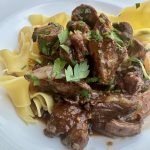
There are plenty of good reasons to make Beef Bourguignon, but here’s our favourite: it tastes even better the next day.
This classic French beef stew is made with tender chunks of beef, double-smoked bacon (find this at your local Eastern European Deli!), red wine, mushrooms and shallots, all brought together in a rich, deeply savoury sauce. It’s the kind of cooking we love teaching because a handful of good techniques make an enormous difference to the finished dish. For the most foolproof cooking experience, pair this recipe with our On-Demand Beef Bourguignon Cooking Class!
Our Beef Bourguignon recipe takes a little planning, but most of the cooking is hands-off. We recommend salting the beef the day before, taking your time browning it properly, and then letting the finished braise spend a night in the refrigerator.
The result? Beautifully tender beef, a sauce with depth and a dinner that’s almost entirely finished before your guests arrive.
Why This Beef Bourguignon Recipe Works
Traditional Beef Bourguignon is a French beef stew from Burgundy, where beef is slowly braised in red wine with aromatic vegetables and herbs. Our version stays true to those classic flavours, with a few techniques we’ve learned are well worth the extra attention.
- We use blade roast. This well-marbled cut contains connective tissue that breaks down during slow cooking, producing tender beef and adding body to the sauce.
- We salt the beef ahead of time. Giving the salt time to penetrate the meat seasons it more evenly. Do this if you’ve planned ahead.
- We brown the beef in batches. A proper sear develops the deep, savoury flavours that form the foundation of the sauce.
- We cook the mushrooms and shallots separately. Adding them toward the end preserves their texture and gives the mushrooms a chance to caramelize.
- We make it a day ahead. Resting the finished braise overnight allows the flavours to become more integrated, and makes the dish much easier to serve.
The Secret to Better Beef Bourguignon: Start the Day Before
Salt Your Beef 24 Hours Ahead
If there’s one preparation step we’d encourage you to plan for, it’s this one.
Cut your blade roast into 1½-inch cubes and season evenly with kosher salt. Place the beef on a rack set over a tray, or in a shallow container, and refrigerate overnight. This technique is called dry brining.
Initially, salt draws moisture to the surface of the meat. As it dissolves, some of that salty moisture is gradually reabsorbed. Over time, salt moves further into the meat and changes how some muscle proteins interact with water. The result is beef that’s seasoned beyond the surface and better able to retain moisture during cooking.
Why Beef Bourguignon Tastes Better the Next Day
You’ve probably noticed that certain soups, stews and braises seem to taste better after a night in the refrigerator. This is why: During braising, the beef releases gelatin, juices and savoury compounds into the cooking liquid. The vegetables, herbs, bacon and wine also contribute their own flavours.
As the finished stew cools and rests, these components have more time to distribute throughout the sauce and meat. Some of the sharper aromatic notes become less prominent, while the overall flavour can seem rounder and more balanced. The gelatin-rich sauce also sets slightly as it chills. When gently reheated, it loosens again into a beautifully cohesive sauce that coats the beef.
It’s not that the refrigerator magically creates new flavour. It’s that time, temperature changes and redistribution of flavour compounds can change how we experience the finished dish.
And there’s one more benefit: chilled fat rises and solidifies on the surface, making it easy to remove any excess before reheating.
Our recommendation: Cook your Beef Bourguignon completely the day before you want to serve it. Cool it promptly, refrigerate overnight, then reheat gently the following day.
Choosing the Best Beef for Bourguignon
We love blade roast for this recipe.
Blade roast comes from the shoulder of the animal, an area that works hard and contains plenty of connective tissue. When cooked gently in liquid, collagen breaks down into gelatin, helping create both tender meat and a rich sauce. This is exactly what you want in a braise. Avoid expensive, lean cuts like beef tenderloin. They don’t have the connective tissue needed for this style of cooking and can become dry.
Beef chuck roast is another excellent choice if blade roast isn’t available.
What Wine Should You Use?
Beef Bourguignon traditionally uses red Burgundy wine, made from Pinot Noir. You don’t need an expensive bottle, but you do want a dry red wine that you’d happily drink. Pinot Noir is a classic choice (we absolutely love the pinot from Cave Spring). A dry Merlot or another balanced, medium-bodied red will also work.
We use wine in two stages: first to deglaze the pot and build the braising sauce, then a smaller amount to finish the mushrooms and shallots.
Ingredients
- 1/2 lb (225 g) double-smoked bacon, rind removed
- 2 1/2 -3lbs (1.25 kg) blade roast, cut into 1 1/2-inch cubes
- 2 tbsp all-purpose flour
- Kosher salt and freshly ground black pepper, to taste
- 1 onion, quartered
- 1 celery rib, halved
- 1 large carrot, peeled and halved
- 2 garlic cloves, peeled and lightly smashed
- 2 bay leaves
- 1 large sprig fresh rosemary
- 4-5 sprigs fresh thyme
- 2 tbsp tomato paste
- 1 1/4 cups dry red wine
- 3 cups homemade or no-sodium beef stock
- Neutral oil, as needed for browning
- 8 oz (225 g) brown or white mushrooms
- 6 oz (170 g) shallots, approximately 6 small
- 2 tbsp butter
- 1/4 cup dry red wine
- 2-3 sprigs flat-leaf parsley, chopped
- Neutral oil, as needed
For serving:
- Wide buttered egg noodles, mashed potatoes or creamy polenta
Instructions
- Cut the beef into 1½-inch cubes and season generously with kosher salt, ideally 24 hours ahead. Refrigerate overnight, uncovered. Before cooking, pat the beef dry, season with black pepper and toss with the flour.
- Preheat a large, heavy-bottomed pot over medium heat. Cut the bacon into lardons and cook for 2–3 minutes, until lightly browned and some of the fat has rendered. Remove with a slotted spoon, leaving the fat in the pot.
- Increase the heat to medium-high. Brown the beef in batches, making sure not to overcrowd the pot. Add a little oil if needed. Brown well on all sides, then transfer to a bowl. You can use a second frying pan to speed up the browning process.
- Add the onion, celery, carrot and garlic to the pot. Stir well, scraping up the browned bits from the bottom.
- Add the bay leaves, rosemary, thyme and tomato paste. Stir to combine and cook for 1–2 minutes.
- Pour in 1¼ cups red wine, scraping the bottom of the pot to release any remaining browned bits. If using a second frying pan, deglaze it with some of the measured wine as well. Bring to a boil and reduce until slightly thickened.
- Return the beef and bacon to the pot, along with any accumulated juices. Add the beef stock and bring just to a boil.
- Cover, reduce the heat to low and simmer gently for approximately 2½ hours, or until the beef is fork-tender. If necessary, continue cooking for another 30 minutes.
- If the sauce is too thin, remove the lid and simmer until reduced to your desired consistency.
- Meanwhile, heat a frying pan over medium-high heat. Add a drizzle of oil, followed by the mushrooms. Season lightly with salt and add ½ cup water. Cook undisturbed for approximately 5 minutes, allowing the water to evaporate and the mushrooms to brown.
- Reduce the heat to medium-low. Add the butter and shallots. Cook for 3–4 minutes, stirring occasionally, until the shallots begin to soften.
- Increase the heat and add the remaining ¼ cup red wine. Boil for 1–2 minutes, until reduced.
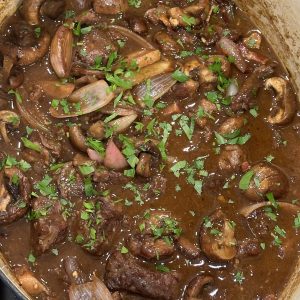
- Once the beef is fork-tender and the sauce has reached the desired consistency, stir in the mushroom and shallot mixture. Heat through for 2–3 minutes.
- Taste and adjust the seasoning. For best results, cool promptly and refrigerate overnight. Reheat gently the following day until thoroughly heated.
- Sprinkle with chopped parsley just before serving. Serve with buttered egg noodles, mashed potatoes or creamy polenta.
Notes
Our Best Chef Tips for Beef Bourguignon
Don’t overcrowd the pan. Too much beef at once lowers the pan temperature, causing the meat to steam rather than brown.
Use no-sodium beef stock. The bacon, seasoned beef and reducing sauce all contribute salt. Starting with unsalted stock gives you control over the final seasoning.
Keep the vegetables large. The onion, celery and carrot are there primarily to flavour the braising liquid. Larger pieces hold together better during the long cooking process.
Don’t add the mushrooms too early. Cooking them separately gives you better colour, better texture and a more pronounced mushroom flavour.
Let tenderness determine the cooking time. Two pieces of blade roast can behave differently depending on the animal, cut and amount of connective tissue. Your beef is ready when a fork slides in easily.
Reduce the sauce before adding the mushrooms. This allows you to concentrate the braising liquid without overcooking your finished garnish.
Substitutions and Variations
Beef: Chuck roast or another well-marbled stewing cut can replace blade roast.
Bacon: Pancetta can replace double-smoked bacon, although you’ll lose some of the smoky character.
Mushrooms: Cremini mushrooms offer a slightly deeper, earthier flavour than white button mushrooms. Either works well.
Shallots: Pearl onions are a traditional alternative. They may require a little longer to become tender.
Wine: Pinot Noir is traditional, but another dry, medium-bodied red wine works well.
Gluten-free: Replace the all-purpose flour with a suitable gluten-free flour blend, or omit the flour and reduce the sauce at the end until it reaches your desired consistency.
What to Serve With Beef Bourguignon
We recommend something that will catch every bit of that beautiful red wine sauce.
- Buttered egg noodles: A classic, straightforward pairing that lets the beef take centre stage.
- Creamy mashed potatoes: Rich, comforting and particularly good for a dinner party.
- Soft polenta: A lovely alternative with a slightly different texture.
- A crisp green salad: Something lightly dressed with a sharp vinaigrette helps balance the richness of the braise.
How to Store, Freeze and Reheat Beef Bourguignon
Refrigerator: Store in an airtight container for up to 3–4 days. Cool promptly before refrigerating.
Freezer: Freeze in airtight, freezer-safe containers for up to 3 months for best quality. Thaw overnight in the refrigerator.
Reheating: Warm gently in a covered pot over low heat, stirring occasionally. Add a splash of beef stock or water if the sauce has thickened too much. Heat thoroughly to 74°C (165°F).
Avoid boiling aggressively during reheating, as the beef is already tender.
Frequently Asked Questions
Can I make Beef Bourguignon the day before?
Yes, and we strongly recommend it. The flavours become more integrated overnight, and the sauce often tastes rounder and more balanced after resting. It’s also much easier to entertain when dinner is already cooked.
What is the best cut of beef for Beef Bourguignon?
Blade roast and chuck roast are excellent choices because they contain enough connective tissue to become tender and succulent during slow braising.
Why is my Beef Bourguignon tough?
The most common reason is that the beef hasn’t cooked long enough. Cuts like blade roast need sufficient time for their collagen to break down. Keep the pot covered at a gentle simmer and check again after another 20–30 minutes.
Do I need to marinate the beef in red wine overnight?
No. Our recipe uses an overnight dry brine instead. Salting the beef ahead of time seasons it more evenly, while the red wine develops flavour during the braising process.
Can I make Beef Bourguignon without wine?
You can replace the wine with additional unsalted beef stock and a small splash of red wine vinegar for acidity. The result won’t have the same flavour profile as traditional Beef Bourguignon, but it will still be a satisfying beef braise.
How do I thicken Beef Bourguignon sauce?
Remove the lid once the beef is tender and simmer gently until the liquid reduces. The flour used to coat the beef and the gelatin released during braising also help give the sauce body.
Can I freeze Beef Bourguignon?
Absolutely. This is an excellent freezer-friendly meal. Cool completely in the refrigerator, portion into airtight containers and freeze for up to 3 months for best quality.
Cook Beef Bourguignon Along With Us
Want us right there in your kitchen?
We’ve put together a $5 follow-along Beef Bourguignon cooking class, where we walk you through the techniques that make this recipe work, from properly browning the beef to building that rich red wine sauce.
You’ll see exactly what we’re looking for at every stage, and you can pause, rewind and cook at your own pace.
Jody O’Malley and Kirstie Herbstreit are Red Seal certified chefs and co-owners of The Culinary Studio in Waterloo, Ontario. With more than 20 years of professional cooking experience and 15 years teaching home cooks, they specialize in making professional cooking techniques approachable and practical. Through their live online cooking classes, on-demand videos and Chef Over Your Shoulder podcast, they share the science and skills behind great cooking, always with their favourite promise: No Cook is Left Behind!