How to Grill Vegetables: Skip the Grill Basket and Get Real BBQ Flavour
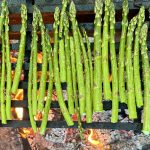
Want to better grill vegetables? Put them directly on the grill grates. Skip the grill basket. Direct contact with the grill creates smoky flavour, char, and those grill marks everyone is chasing.
People buy a beautiful grill, spend money on great charcoal or pellets, and then throw vegetables into a metal basket like they are protecting them from something. We get it. Vegetables can feel fragile. But if you want vegetables that taste grilled, not steamed with light emotional support from the BBQ, they need direct contact with heat. We’d rather sacrifice 1 or 2 asparagus for the best end result!
As we experienced in a recent Middle Eastern Grill Class, properly grilled vegetables reminds us how little effort it takes to make grilled vegetables steal the show.
Just the other day, my husband tossed a pile of baby peppers onto the Big Green Egg. Nothing fancy. Just sliced in half, olive oil, and kosher salt. That was it. Those peppers picked up incredible smoky flavour from the charcoal, blistered beautifully, and disappeared faster than the meat on the table. The kids loved them too (and I was thrilled to use up a bag of on-sale peppers!)
How to Grill Vegetables Properly
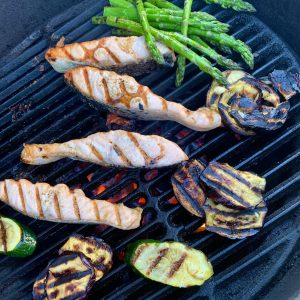
The best grilled vegetables go directly on the grill. Direct contact creates smoke, char, and flavour that baskets simply cannot.
A grill basket makes vegetables easier to manage, but it also creates a barrier. Vegetables roast and steam instead of grilling. You lose smoke exposure and those dark caramelized edges.
Think about vegetables the same way you think about steak. Contact equals flavour.
Some vegetables work especially well directly on the grill:
- zucchini, sliced lengthwise
- baby peppers, halved
- red onions, cut into thick rounds
- asparagus
- corn
- garlic scapes (find these early on in the season at your local farmer’s market)
- mushrooms (scrape out the dark gills of portabella mushrooms first)
- eggplant planks
Larger pieces make life easier. Tiny diced vegetables belong in stir fry, not balancing over fire.
The Science Behind Great Grilled Vegetables
Vegetables grill beautifully because high heat drives off moisture and creates browning.
That browning is called the Maillard reaction. It creates hundreds of new flavour compounds and gives vegetables complexity, sweetness, and those deeply savoury notes we all love.
Smoke matters too.
When vegetables sit directly over charcoal or live fire, they absorb smoke compounds that cling to their surface. That is why peppers cooked directly over grates taste completely different than vegetables cooked inside a basket.
Charcoal and wood-fired grills amplify this effect, but ask our friends at Bast Home Comfort: your gas or propane grill flames are giving you delicious results as well.
Below is less of a recipe, and more of a guideline on how to grill vegetables. Have fun, mix it up, but remember the rules!
- Prep Time: 10 Minutes
- Cook Time: 10-15 min
- Total Time: 25 Minutes
- Yield: 4-6 Servings 1x
Ingredients
- 2 zucchini, sliced lengthwise into thick planks
- 4 baby bell peppers, halved and seeded
- 1 red onion, sliced into thick rounds
- 2 ears corn, husks removed
- 1 bunch asparagus
- 1 bunch garlic scapes, trimmed if in season
- 2 tbsp olive oil
- kosher salt
- black pepper
- lemon wedges for serving, or a drizzle of good balsamic here.
Instructions
- Preheat grill to medium-high heat.
- Toss vegetables with olive oil, kosher salt, and pepper.
- Place vegetables directly on clean grill grates.
- Grill peppers and zucchini 3 to 4 minutes per side.
- Grill onions 4 to 5 minutes per side.
- Grill asparagus and garlic scapes 2 to 3 minutes, turning often.
- Grill corn 8 to 10 minutes, rotating occasionally.
- Remove everything to a platter and finish with lemon.
Notes
Seasonal Vegetables Worth Throwing on the Grill
The best grilled vegetables change through the season.
Spring
Asparagus, garlic scapes, green onions
Summer
Zucchini, peppers, corn, eggplant
Late Summer
Tomatoes, mushrooms, peaches
Fall
Squash, cabbage wedges, carrots
Garlic scapes deserve special attention. They show up briefly each year and taste like asparagus and garlic had a very successful summer project together. They grill quickly and become smoky, tender, and slightly sweet.
Jody and Kirstie’s Hot Tips
- Bigger pieces grill better than tiny pieces
- Oil vegetables lightly, not heavily
- Salt before grilling
- Keep a cooler side of the grill ready
- Leave vegetables alone long enough to char
- Finish with lemon or fresh herbs after grilling
- Do not fear darker spots. Darker often equals delicious
Substitutions
- Use avocado oil instead of olive oil for higher heat
- Swap peppers for mushrooms or eggplant
- Use green onions instead of garlic scapes
- Add halloumi for extra protein
What to Know / Avoid
Do not overcrowd the grill.
Do not slice vegetables too thin.
Do not move vegetables every thirty seconds. Grill marks require patience.
And skip the basket if smoky flavour is the goal.
Storage Recommendations
Store leftover grilled vegetables in the refrigerator for up to four days.
Add them to pasta salads, grain bowls, wraps, omelets, or sandwiches.
Cold grilled vegetables straight from the fridge also become suspiciously good standing-at-the-counter snacks.
FAQ
Should I use a grill basket for vegetables?
Not if flavour is the goal. Direct grill contact creates more smoke and char.
What vegetables are best for grilling?
Zucchini, peppers, onions, asparagus, corn, mushrooms, and garlic scapes work beautifully.
How do you keep vegetables from sticking?
Preheat the grill well and lightly oil the vegetables.
What are garlic scapes?
Garlic scapes are the curly stems of hardneck garlic plants. They have a mild garlic flavour and grill beautifully.
Key Takeaways
- Direct grill contact creates better flavour than a basket
- Smoke and char are part of the flavour equation
- Larger vegetable pieces grill more successfully
- Seasonal vegetables keep grilling interesting
- Garlic scapes deserve a spot on your summer BBQ
Want to cook this way with us? Our Middle Eastern Grill Class uses these exact grilling techniques alongside some of our favourite summer recipes.
About the Authors
Jody O’Malley and Kirstie Herbstreit are the Red Seal certified chef co-owners of The Culinary Studio in Waterloo, Ontario. Jody is a Stratford Chefs School graduate (2002) and Kirstie trained at SAIT in Calgary (2003). Together, they bring over 20 years of professional cooking experience and 15 years building one of Canada’s leading culinary education businesses.