
This post contains affiliate links
Sauce Vierge: The Easy No-Cook Tomato Sauce You’ll Use on Everything
TL;DR: Sauce Vierge is a fresh, no-cook tomato sauce made with ripe tomatoes, extra virgin olive oil, lemon, basil and a touch of vinegar. Dice the tomatoes, grate them, or use a combination of both for an easy summer sauce that is especially good tossed with pasta.
When summer tomatoes are at their best, sometimes the smartest thing you can do is not cook them at all. Sauce Vierge is one of our favourite ways to turn beautiful ripe tomatoes into dinner in about 10 minutes, without turning on the stove for anything other than the pasta.
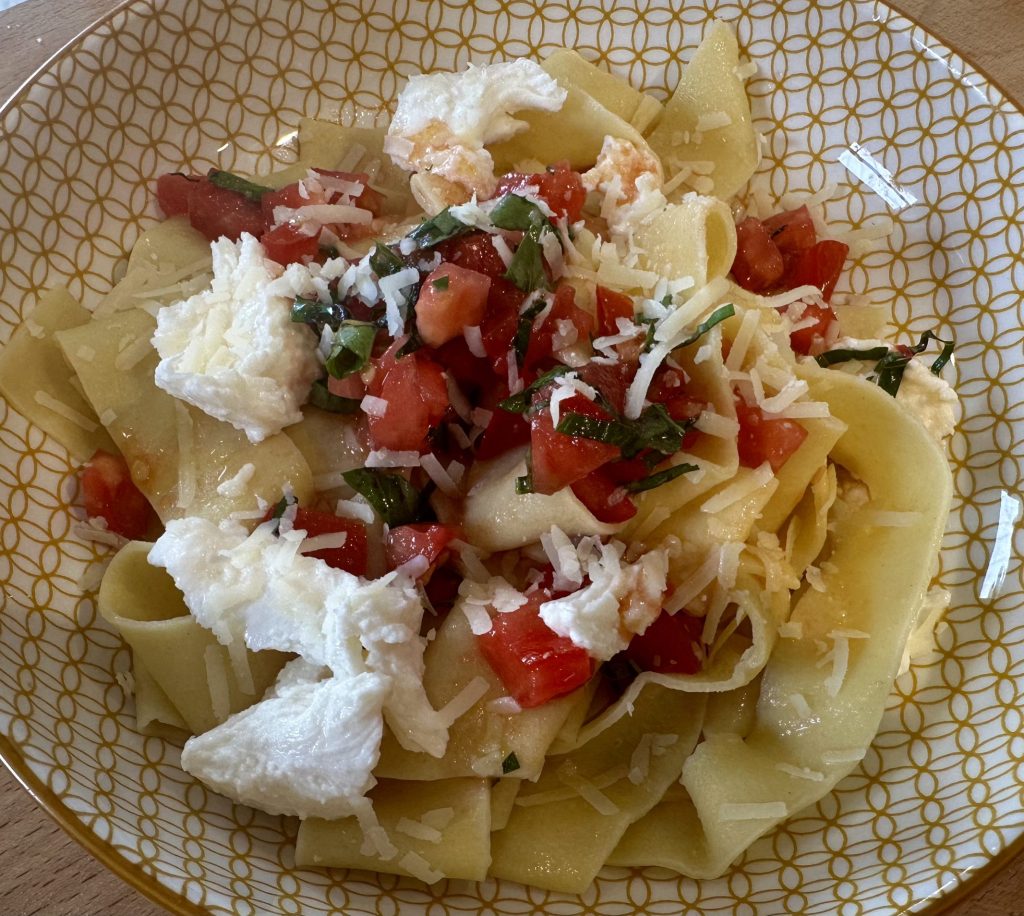
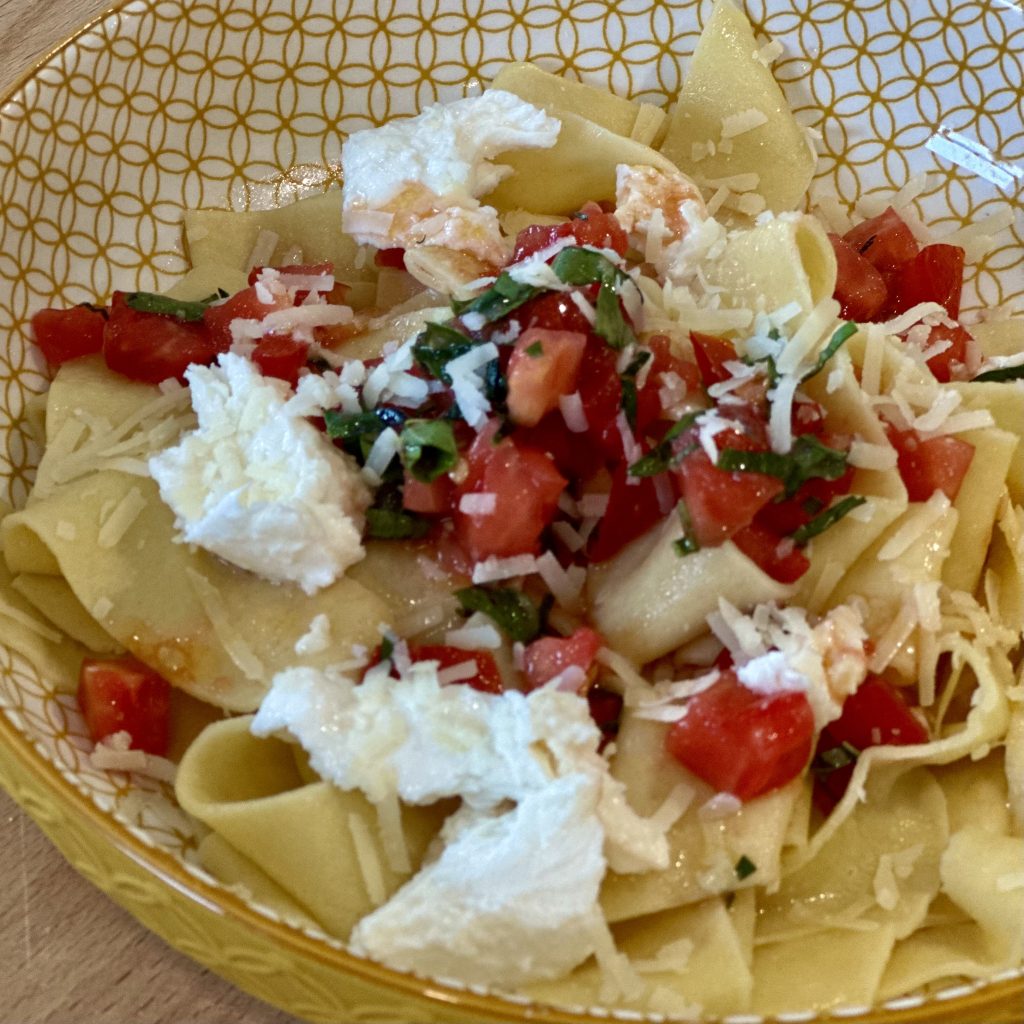
We recently taught a cooking class featuring how to make fresh, homemade pasta and served it with this sauce. With Mozzarella Fresca, or all-the-rage Burrata, it was absolute heaven!
Traditionally a French sauce often served with fish, Sauce Vierge combines fresh tomatoes, olive oil, herbs and acidity. It’s fantastic spooned over grilled fish, chicken or steak, but we especially love it as a fresh tomato pasta sauce. And we’ve discovered an even easier way to make it: grate the tomatoes. Better yet, grate some and dice some. The grated tomatoes create the juicy sauce while the diced tomatoes give you texture.
What Is Sauce Vierge?
Sauce Vierge is a French no-cook sauce traditionally made with fresh tomatoes, olive oil, lemon and herbs. It’s fresh, bright and designed to let really good tomatoes do most of the work.
Like many classic sauces, you’ll find plenty of variations. Some versions use parsley, chives, coriander or tarragon. Others include shallots, garlic, capers or different vinegars. Our version is deliberately simple, with basil, lemon and just a touch of sherry or red wine vinegar.
The key isn’t adding more ingredients. It’s starting with ripe tomatoes and seasoning them properly. If you’ve just come home from the market with tomatoes that smell like tomatoes before you’ve even cut into them, you’re halfway there.
Our Easy Sauce Vierge Recipe
Our Sauce Vierge recipe takes about 10 minutes and requires no cooking. Use ripe vine tomatoes or beefsteak tomatoes and choose a good extra virgin olive oil because you’ll taste every ingredient in this sauce.
- Prep Time: 10 Minutes
- Total Time: 10 Minutes
- Yield: 2 cups 1x
Ingredients
- 2 to 3 ripe vine-ripened or beefsteak tomatoes, about 2 cups diced or grated
- 1/2 cup extra virgin olive oil
- Juice of 1/2 lemon
- 1/2 bunch fresh basil, finely sliced
- 1 clove garlic, minced, optional
- 1/2 teaspoon sherry vinegar or red wine vinegar
- A good pinch of sea salt
Instructions
You can dice your tomatoes for a chunkier Sauce Vierge, grate them for a looser sauce, or combine the two methods. We prefer the combination, especially when we’re serving it with pasta.
- Prepare the tomatoes. Dice the tomatoes into small pieces, grate them using the large holes of a box grater, or do a combination of both. You’ll need about 2 cups total.
- Season with salt. Place the tomatoes in a bowl, add a generous pinch of sea salt and let them sit for about 5 minutes. The salt will begin drawing out their juices, which become part of your sauce.
- Add the olive oil and acid. Stir in the extra virgin olive oil, lemon juice and sherry or red wine vinegar.
- Finish with the aromatics. Fold in the finely sliced basil and minced garlic, if using.
- Taste and adjust. Add another pinch of salt, squeeze of lemon or tiny splash of vinegar if the sauce needs it.
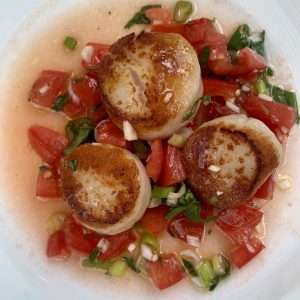
- Serve. Toss with hot pasta or spoon generously over grilled fish, chicken or steak, or for a real treat, with pan-seared scallops.
Notes
The Easiest Trick for Fresh Tomato Sauce: Grate Your Tomatoes
Grating ripe tomatoes creates an almost instant fresh tomato sauce. You get all the juicy flesh without having to peel or finely dice the tomatoes, and most of the skin conveniently stays behind.
Cut the tomato in half across the middle, then hold the cut side against the large holes of a box grater set over a bowl. Grate until you’ve worked through most of the flesh and you’re left holding a flattened piece of tomato skin.
It’s surprisingly satisfying, and considerably faster than peeling and finely chopping a pile of tomatoes. For Sauce Vierge, we’ve landed on a combination of grated and diced tomatoes as our favourite method. The grated portion gives us enough liquid to coat pasta beautifully, while the diced portion keeps the fresh tomato texture that makes this sauce so good.
If you’re serving Sauce Vierge over grilled fish or steak, you may prefer it more heavily diced. For pasta, we’d definitely get the box grater involved.
Why Salt the Tomatoes Before Adding Everything Else?
Salting tomatoes and letting them sit for a few minutes draws out some of their natural juices. Instead of draining that liquid away, we use it as part of the sauce.
Salt moves water out of the tomato cells through osmosis, and that liquid brings plenty of tomato flavour along with it. When you combine those juices with extra virgin olive oil and acid, you’ve already created the beginnings of a beautiful fresh sauce.
This is especially useful with pasta because the tomato liquid helps coat the noodles. Add a splash of starchy pasta water if you need it and the whole thing comes together without ever simmering a sauce on the stove.
Why Extra Virgin Olive Oil Matters in Sauce Vierge
Because Sauce Vierge isn’t cooked, the flavour of the olive oil remains front and centre. This is a good place to use an extra virgin olive oil that you genuinely enjoy tasting on its own.
You don’t need to hunt down the most expensive bottle in the store, but you do want an olive oil that tastes fresh rather than stale, flat or excessively bitter. The oil brings richness and body to all that juicy tomato and balances the acidity from the lemon and vinegar.
This is one of the things we love about recipes with very few ingredients. Every ingredient has a job, and you can taste what each one brings to the bowl.
Why We Use Both Lemon Juice and Vinegar
Lemon juice gives Sauce Vierge fresh citrus flavour, while a small amount of sherry or red wine vinegar brings a sharper, more complex acidity. Together, they balance the sweetness of ripe tomatoes and richness of the olive oil.
Acid is one of the most useful tools you have when seasoning food. It doesn’t simply make something taste sour. Used properly, it creates contrast and can make other flavours taste brighter and more pronounced.
This is also why we give you a starting measurement and then tell you to taste. Tomatoes vary enormously in sweetness and acidity, as do lemons. Start with the recipe, taste the finished sauce and adjust from there. You want brightness, not a tomato salad that tastes like vinegar.
Why Sauce Vierge Makes Such a Good Pasta Sauce
Hot pasta gently warms Sauce Vierge without cooking away the fresh tomato and basil flavours. The combination of tomato juice, olive oil and a little starchy pasta water creates a surprisingly satisfying sauce.
Cook your pasta in generously salted water and have the Sauce Vierge waiting in a large bowl. Transfer the hot pasta directly into the tomatoes and toss everything together. The residual heat warms the tomatoes, releases the aroma of the basil and garlic, and helps the sauce cling to the noodles.
This is where our half-grated, half-diced tomato method really shines. The grated tomatoes behave like a traditional sauce, while the diced tomatoes remind you that you’re eating something fresh and summery.
Before draining your pasta, save a cup of pasta water. You probably won’t need much, but a splash can loosen the sauce and help the olive oil and tomato juices coat the pasta more evenly.


For us, this is the kind of pasta you make in August when tomatoes are everywhere and it’s far too nice outside to spend an hour simmering sauce.
What Else Can You Serve with Sauce Vierge?
Sauce Vierge works particularly well with grilled and pan-seared foods because its fresh tomato and acidity provide contrast to all that browning and char. Think of it as an all-purpose summer sauce rather than something reserved for pasta.
Spoon it over grilled or pan-seared fish, steak, chicken or shrimp. It’s also excellent with roasted vegetables, grilled bread, crostini, burrata or fresh mozzarella. If you’ve grilled a beautiful piece of fish and aren’t sure what to put with it, a generous spoonful of Sauce Vierge is often all it needs.
On steak, it works almost like a softer, more summery alternative to chimichurri. With grilled bread and burrata, you’ve basically created dinner without trying particularly hard. We approve.
The Science Behind a No-Cook Tomato Sauce
A good no-cook tomato sauce relies on salt, acid and fat rather than heat to build flavour and texture. Salting releases tomato juices, acidity balances sweetness, and olive oil adds richness and helps carry flavour across your palate.
Normally, when we make tomato sauce, heat does a lot of the work. Cooking breaks down the tomatoes, evaporates water, concentrates flavour and changes their texture. Sauce Vierge takes another approach.
We’re starting with tomatoes that already taste fantastic, so instead of concentrating them with heat, we use salt to draw out their juices. Lemon and vinegar sharpen the flavour, while olive oil adds richness and carries fat-soluble flavour compounds from ingredients such as basil.
That’s also why this sauce isn’t particularly forgiving of mediocre tomatoes. Cooking can improve an average tomato by concentrating it and allowing us to build other flavours around it. A raw tomato sauce puts everything right out in the open.
Peak-season tomatoes are the point.
Jody and Kirstie’s Hot Tips
- Use really ripe tomatoes. Save this recipe for tomato season when vine-ripened or beefsteak tomatoes are juicy and full of flavour.
- Try the box grater. It’s one of the quickest ways to turn a tomato into sauce, and you don’t have to peel it first.
- For pasta, grate and dice. The grated tomatoes coat the noodles while the diced tomatoes give you texture.
- Salt first and keep the juices. That liquid coming out of the tomatoes is flavour, not waste.
- Use good extra virgin olive oil. There are so few ingredients here that quality matters.
- Add the basil near the end. Once sliced, basil bruises and darkens fairly quickly.
- Go easy on the garlic. Raw garlic can quickly overpower ripe tomatoes. One small clove is plenty, and leaving it out is completely fine.
- Taste before adding more acid. Your tomatoes and lemon will tell you how much vinegar you need.
Substitutions
Sauce Vierge is flexible as long as you keep its basic structure of fresh tomatoes, olive oil, herbs and acidity. Change the supporting ingredients according to what you have without losing sight of the tomatoes.
Cherry tomatoes work beautifully, although we’d chop or quarter them rather than trying to grate them. You can also swap the basil for parsley, chives, tarragon or a combination of fresh herbs.
Both sherry vinegar and red wine vinegar work well. Sherry vinegar has a slightly rounder, more complex flavour, while red wine vinegar is easy to find and does the job beautifully. You can also leave the garlic out entirely, particularly if you’re serving the sauce with delicate fish.
What to Know and Avoid
The biggest mistake with Sauce Vierge is making it with tomatoes that don’t taste good on their own. There is no long cooking time, sugar or pile of seasonings to rescue an underwhelming tomato.
Keep good tomatoes at room temperature whenever possible, and don’t overwhelm them with garlic or vinegar. We also wouldn’t make this sauce days in advance. Part of its appeal is the contrast between juicy tomatoes and fresh basil, and both begin to lose that quality with extended storage.
Most importantly, don’t overcomplicate it. Sauce Vierge is a great example of something we tell home cooks all the time. More ingredients don’t necessarily mean more flavour. Sometimes the trick is knowing when you’ve already got enough.
How to Store Sauce Vierge
Sauce Vierge tastes best the day you make it, although you can refrigerate leftovers in a covered container for up to 2 days. Bring it closer to room temperature before serving again.
The olive oil may firm up when chilled, which is completely normal. Let the sauce sit out briefly and give it a good stir. If you know you’re making it a few hours ahead, consider adding the freshly sliced basil closer to serving so it stays bright and fragrant.
Sauce Vierge FAQ
What is Sauce Vierge?
Sauce Vierge is a fresh French sauce typically made with uncooked tomatoes, olive oil, lemon and herbs. It’s traditionally served with fish but also works beautifully with pasta, grilled meat and vegetables.
Do you cook Sauce Vierge?
No. Sauce Vierge is a no-cook tomato sauce. The fresh flavour and texture of ripe tomatoes are a big part of what makes it special.
Can I use Sauce Vierge as a pasta sauce?
Absolutely. Toss hot pasta directly with the Sauce Vierge. The pasta gently warms the tomatoes, while the tomato juices and olive oil create a light, fresh sauce.
Do I need to peel the tomatoes?
No. Leave the skins on if you’re dicing the tomatoes. If you grate them, most of the skin conveniently stays behind in your hand.
Can I make Sauce Vierge ahead of time?
You can make it a few hours ahead and keep it refrigerated. For the freshest flavour and colour, add the sliced basil closer to serving.
Is Sauce Vierge served hot or cold?
Sauce Vierge is generally served at room temperature or gently warmed by the food it’s served with. We love tossing it with hot pasta and letting the pasta provide all the heat it needs.
Key Takeaways
- Sauce Vierge is a quick, no-cook tomato sauce that’s best made when tomatoes are at their peak.
- Grating tomatoes creates an instant sauce, while combining grated and diced tomatoes gives you both sauciness and texture.
- Salt, lemon, vinegar and good extra virgin olive oil bring out the flavour of fresh tomatoes without cooking them.
- Toss Sauce Vierge with hot pasta or spoon it over grilled fish, chicken, steak or vegetables.
- Keep it simple. When the tomatoes are this good, they don’t need much help.
If you love learning the simple chef techniques that make everyday cooking better, listen to our Chef Over Your Shoulder podcast, where we explain the why behind what happens in your kitchen. No Cook is Left Behind.
About Jody and Kirstie
Jody O’Malley and Kirstie Herbstreit are the Red Seal certified chef co-owners of The Culinary Studio in Waterloo, Ontario. Jody is a Stratford Chefs School graduate (2002) and Kirstie trained at SAIT in Calgary (2003). Together, they bring over 20 years of professional cooking experience and 15 years building one of Canada’s leading culinary education businesses. They teach home cooks the science and techniques behind great food, not just the recipes, and co-host the Chef Over Your Shoulder podcast alongside Amy Schlueter.
Homemade Pasta, Sauce Vierge & Fresh Mozza


