What to Do With Butternut Squash: Try it Raw
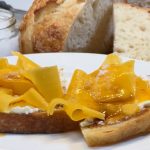
TL;DR: Cut the butternut squash where the neck meets to bulb. Shave the seedless neck into raw ribbons for goat cheese crotini with maple syrup, and save the round bulb.
You picked up a butternut squash because it looked beautiful at the market and you could not beat the price. Now it’s sitting on your counter, waiting for the same old roasting pan. We’re Jody and Kirstie, Red Seal chefs who shop at St. Jacobs Market every week, and this is what to do with butternut squash when you want something new. Start by eating some raw.
Made in collaboration with St. Jacobs Market.
What to Do with Butternut Squash: Use the Neck, Save the Bulb
Think of butternut squash as two vegetables. The long neck is solid flesh with no seeds, and you can eat it raw. It peels into clean ribbons from top to bottom. The round bulb hols the seeds and a hallow centre , whick makes it better for cubing, roasting and soup.
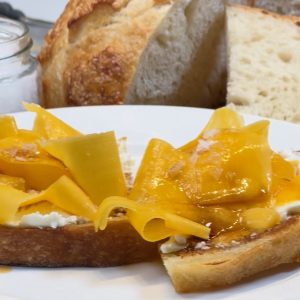
That split is how we get three dishes out of one squash. The neck goes raw onto the crostini (recipe below) and into a pan of brown butternut squash ribbons. The bulb goes into our Sunshine Soup.
To split it: lay the squash on its side and cut straight through where the neck starts to swell into the bul. Stan the neck on its flat end and peel it top to bottom. Wrap the bulb and keep it in the fridge for later in the wekk.
Can You Eat Butternut Sqaush Raw?
Yes. Shaved thin, raw butternut squash is crisp and a little sweet, a lot like a raw carrot. Slice it thin, though. We use a peeler, because thick pieces of raw squash are tough to chew.
The kitchen science: why we salt the ribbons
A pinch of salt on raw vegetables pulls water out of their cells by osmosis. The salt sits on the surface, and the water inside the cells moves outward to even things out. On squash ribbons that does two jobs at once: it season them and it relaxes them just enough to drape over the toast instead of springing off of it.
Salt the ribbons before you build the crostini. You want them seasoned and a little softer, with plenty of crunch left.
- Prep Time: 10 minutes
- Cook Time: 5 minutes
- Total Time: 15 minutes
- Yield: 4 crostini 1x
Ingredients
2 slices sourdough
1 Tbsp unsalt butter, for toasting
1 Tbsp olive oil, for toasting
200 g soft goat cheese (chevre)
2 cups raw butternut squash ribbons
2 tsp olive oil, for the ribbons
1 to 2 Tbsp maple syrup
Flaky sea salt
salt and pepper
Instructions
- Toast the bread. Heat the butter and olive oil in a skillet over medium heat.
- Peel the neck of the squash, then run a Y-peeler down the length in long, steady strokes to make 2 cups of ribbons.
- Toss the ribbons with 2 tsp olive oil and a pinch of salt and pepper.
- Spread the goat cheese over the warm toast, about 50g per slice.
- Pile the ribbons loosely on top.
- Finish with a drizzle of maple syrup and a pinch of flaky sea salt. Serve immediately.
Made in collaboration with the St. Jacobs Market.
Notes
Types of Squash at St. Jacobs Market
In the fall, the produce stalls at St. Jacobs are stacked with winter squash. Each on cooks a little differently, so here’s what to reach for.
Butternut squash

Tan and bell-shaped with a long neck. The flesh is smooth and sweet and the seedless neck is the easiet squash to peel. It’s the one we buy for ribbons and soup.
Honeynut squash
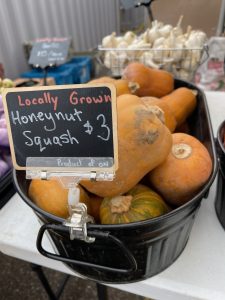
It looks like a mini butternut, about half the size, with deeper orange skin and sweeter flesh. The skin is thin enough to eat, so you can halve and roast it without peeling. It doesn’t keep as long as butternut, so cook it within a week or two.
Acorn squash
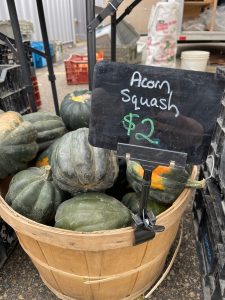
Small, dark green and deeply ridged. Those ridges make it a pain to peel so cut it in halt, scoop the seeds and roast it in the skin.
Spaghetti squash
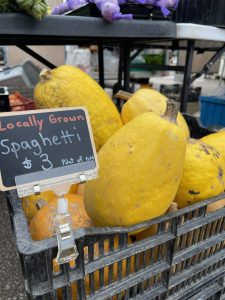
Pale yellow and oval. Roast it whole or halved, then pull a fork through the flesh and it comes away in long strands.
Buttercup squash
Squat and dark green, with a round cap on the bottom. The flesh is dense and sweet, and it is great roasted or mashed.
Kobocha squash
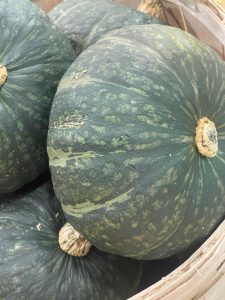
Round and dark green, often with faint stripes. Kobocha has a drier deep orange flesh that holds its shape when roasted
How to tell buttercup from kabocha
Flip it over. Buttercup has a raised round cap on its blossom end, a little like a belly button. Kabocha’s bottom is plain. Inside, kabocha is dried of the two.
Where We Shopped at St. Jacobs Market
Everything for this recipe came from these stalls
- Squash: 100 Mile Produce
- Goat Cheese: Mickey McGuire’s Cheese
- Sourdough: Artisan Breads
- Maple Syrup: Edgar Gingerich Maple Syrup, Harvey Martin Farms
How to pick a butternut squash
- Weight: pick up a few. The best one is heavy for its size
- Skin: look for a matte, even tan. A shiny squash was picked too early, and green patches mean it isn’t fully ripe.
- Surface: skip any with soft spots, bruises, or cuts.
- Shape: for ribbons, choose one with a long, thick neck. More neck means more ribbons