Moroccan Seven Vegetable Stew with Ras el Hanout
TL;DR: Moroccan Seven Vegetable Stew
A hearty, naturally plant-based Moroccan-inspired stew featuring cabbage, carrots, squash, zucchini and warming Ras el Hanout spices. The secret is cooking the vegetables in stages so each one keeps its texture and character. Perfect for November farmers’ market cooking, served over couscous and finished with fresh parsley and preserved lemon.
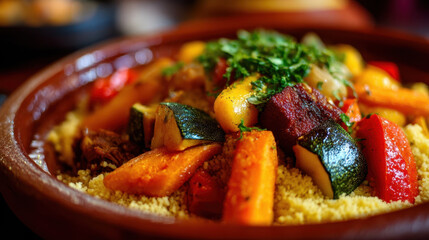
Some recipes change the way you think about cooking. This Moroccan Seven Vegetable Stew was one of those recipes for us.
We first made it over 10 years ago, and it was a revelation. The use of warm, fragrant spices in a savoury vegetable dish was something special. Cinnamon, cumin, coriander, ginger and other spices working together to create something rich and deeply satisfying, without needing meat or a long cooking time.
And the vegetables! Seven different vegetables, each treated with a little respect. The cabbage gets browned, the carrots have time to simmer, and the squash and zucchini are added later so they hold their shape. Nothing turns to mush. Every vegetable brings something to the table.
The biggest takeaway: do not chop the vegetables up into small, soup-like pieces. The size is significant, and requires a knife & fork at the table. They are the star of the show!
We especially love making this dish in November, when our local farmers’ markets are still full of beautiful cabbage, carrots, squash and other late-season vegetables. It’s an excellent way to celebrate what’s growing close to home.
Serve it over fluffy couscous (which literally takes 5 minutes to cook) for a satisfying vegetarian dinner, or alongside a simple roasted chicken. And if you can get your hands on some preserved lemons, a little chopped over the finished dish is fantastic.
What Is Ras el Hanout?
If there’s one ingredient that makes this Moroccan vegetable stew stand out, it’s Ras el Hanout.
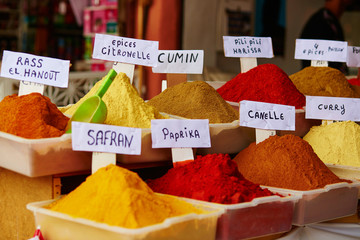
Ras el Hanout is a traditional North African spice blend, especially associated with Moroccan cooking. Its name roughly translates to “head of the shop,” referring to a spice merchant’s finest selection.
There’s no single recipe for Ras el Hanout. Every spice merchant and household can have a slightly different version. And we too have our own!
Depending on the blend, you might find:
- Cumin and coriander for earthy warmth
- Cinnamon and cloves for sweet, fragrant notes
- Ginger and turmeric for warmth and colour
- Cardamom, nutmeg and allspice for complexity
- Black pepper or chilli for a little heat
The beauty of Ras el Hanout is how these spices work together. It’s aromatic rather than necessarily spicy-hot, with layers of warmth that complement the natural sweetness of root vegetables and squash.
Our chef tip: Start with one tablespoon, then taste. Some blends are more intense than others, and a good-quality, fresh spice blend makes a noticeable difference.
You can find Ras el Hanout at specialty spice shops, Middle Eastern grocers and many well-stocked supermarkets, or see below for our recipe!
- Prep Time: 20 minutes
- Cook Time: 40 Minutes
- Total Time: 60 minutes
- Yield: 4–6 Servings 1x
Ingredients
- 1/4 cup olive oil
- 1/2 head cabbage, cut into 6 wedges
- 1 large onion, cut into wedges
- 2 cloves garlic, finely chopped
- 1-inch piece fresh ginger, finely chopped
- 3 large carrots, cut into 3-inch sticks
- 1 tbsp Ras el Hanout, or more to taste
- 1 can (796 mL) good-quality whole peeled tomatoes, torn by hand
- Water, just enough to cover
- Salt and freshly ground black pepper, to taste
- 1 lb (454 g) peeled butternut squash or pumpkin, cut into wedges
- 2 zucchini, quartered lengthwise
- Handful of fresh parsley, chopped
Optional for serving:
- Cooked couscous
- Finely chopped preserved lemon
- Extra-virgin olive oil
Instructions
- Heat your widest, heavy-bottomed pot (braiser) over medium heat. Add the olive oil, followed by the cabbage wedges. Allow the cabbage to brown well on its cut sides before turning. Season with salt.
- Add the onion wedges (move the cabbage to the sides of the pot) and cook for a few minutes, allowing them to soften slightly. Stir in the chopped garlic and ginger.
- Add the carrots and Ras el Hanout. Stir everything together and cook for about 1 minute to toast the spices and release their aroma.
- Add the torn tomatoes and their juices. Cook for a few minutes, allowing the tomatoes to reduce slightly and concentrate their flavour.
- Pour in just enough water to barely cover the vegetables. Bring to a boil, reduce to a simmer, cover and cook for approximately 10 minutes, until the carrots and cabbage are beginning to become tender.
- Add the butternut squash or pumpkin and zucchini. Continue simmering, partially covered, for another 10–15 minutes, or until all the vegetables are tender but still holding their shape. The sauce should be slightly thickened.
- Taste and adjust the seasoning with salt, pepper and additional Ras el Hanout if desired.
- Serve generously over fluffy couscous, topped with chopped parsley. Finish with a little finely chopped preserved lemon, if using.
Notes
Five Chef Tips for Better Moroccan Vegetable Stew
1. Brown the cabbage. Don’t just boil it.
This is one of the most important steps in the recipe.
Cabbage develops wonderful sweetness when it’s browned in olive oil. Those golden edges add depth to the finished stew.
Use a wide pot and give the cabbage room. If the pot is crowded, brown it in batches.
2. Toast your Ras el Hanout.
Adding the spice blend directly to the warm oil and vegetables for about a minute helps release its aromatic compounds.
Keep everything moving so the spices don’t burn. You want fragrant, not bitter.
3. Add vegetables according to cooking time.
This is the difference between a beautiful vegetable stew and a pot of overcooked vegetables.
Carrots and cabbage need more time. Squash and zucchini cook faster.
By adding them in stages, every vegetable finishes at roughly the same time, with its own texture intact.
4. Don’t drown the vegetables.
Add just enough water to barely cover the vegetables. This is a stew, not a soup.
The tomatoes, vegetables and spices will create a beautiful broth as everything cooks. If the liquid is too thin toward the end, remove the lid and let it reduce for a few minutes.
5. Finish with preserved lemon.
If you’ve never cooked with preserved lemons, this is a wonderful place to start.
Preserved lemons are lemons cured in salt, developing an intense, savoury citrus flavour. They’re a staple in many Moroccan dishes.


Rinse off any excess salt, remove the pulp if desired, and finely chop a little of the peel. Sprinkle it over the finished stew.
That salty, citrusy finish is a beautiful contrast to the warm spices and sweet vegetables.
Five Chef Tips for Better Moroccan Vegetable Stew
1. Brown the cabbage. Don’t just boil it.
This is one of the most important steps in the recipe.
Cabbage develops wonderful sweetness when it’s browned in olive oil. Those golden edges add depth to the finished stew.
Use a wide pot and give the cabbage room. If the pot is crowded, brown it in batches.
2. Toast your Ras el Hanout.
Adding the spice blend directly to the warm oil and vegetables for about a minute helps release its aromatic compounds.
Keep everything moving so the spices don’t burn. You want fragrant, not bitter.
3. Add vegetables according to cooking time.
This is the difference between a beautiful vegetable stew and a pot of overcooked vegetables.
Carrots and cabbage need more time. Squash and zucchini cook faster.
By adding them in stages, every vegetable finishes at roughly the same time, with its own texture intact.
4. Don’t drown the vegetables.
Add just enough water to barely cover the vegetables. This is a stew, not a soup.
The tomatoes, vegetables and spices will create a beautiful broth as everything cooks. If the liquid is too thin toward the end, remove the lid and let it reduce for a few minutes.
5. Finish with preserved lemon.
If you’ve never cooked with preserved lemons, this is a wonderful place to start.
Preserved lemons are lemons cured in salt, developing an intense, savoury citrus flavour. They’re a staple in many Moroccan dishes.
Rinse off any excess salt, remove the pulp if desired, and finely chop a little of the peel. Sprinkle it over the finished stew.
That salty, citrusy finish is a beautiful contrast to the warm spices and sweet vegetables.
What to Serve with Moroccan Seven Vegetable Stew
Fluffy couscous: Our favourite way to serve it. Couscous absorbs the fragrant tomato and spice broth beautifully.
Simple roasted chicken: A fantastic pairing when you’re looking for a more substantial dinner. Keep the chicken simply seasoned and let the stew do the heavy lifting.
Chickpeas: For extra protein while keeping the meal plant-based, add a drained can of chickpeas during the final 10 minutes of cooking.
Crusty bread: Perfect for soaking up every last spoonful of sauce.
Frequently Asked Questions
Is Moroccan Seven Vegetable Stew spicy?
Not necessarily. Ras el Hanout is usually more aromatic than hot, although blends vary. Start with one tablespoon and adjust to your taste.
Can I make this stew ahead of time?
Absolutely. The spices develop beautifully as the stew sits. Refrigerate for up to 3–4 days in an airtight container and reheat gently so the vegetables don’t become too soft.
Can I substitute other vegetables?
Of course. Turnips, parsnips, sweet potatoes and rutabaga are all excellent options. Just consider their cooking times and add them accordingly.
Can I freeze Moroccan vegetable stew?
You can, although zucchini and squash tend to soften considerably after freezing and reheating. For the best texture, we prefer enjoying this stew fresh or refrigerated for a few days.
How can I make my own Ras El Hanout?
Stop into your local Bulk Barn to pick up exactly what you need! Blend together:
2 tsp. ground ginger
2 tsp. ground coriander
1 1/2 tsp. ground cinnamon
1 1/2 tsp. ground black pepper
1 1/2 tsp. ground turmeric
1 1/4 tsp. ground nutmeg
1 1/4 tsp. ground allspice
1/2 tsp. ground cloves