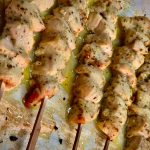
Chicken souvlaki is fast, simple, and wildly reliable. You do not need skewers to make it great. Good seasoning, high heat, and proper cutting do the heavy lifting.
You’ve probably had dry chicken skewers before. Overcooked, under-seasoned, clinging to a sad wooden stick. We’ve seen it in classes. We’ve rescued it mid-demo. We’ve eaten it at backyard BBQs and politely smiled.
Here’s the fix.
We’ve been teaching Greek-inspired grilling for years, and this Chicken Souvlaki recipe is one of our go-to methods when we want something quick, crowd-friendly, and consistent. It also comes with a family endorsement. Jody’s brother swears by this exact method and proudly calls them “shish-less kebabs.” No skewers. No fuss. Still excellent.
Let’s walk you through how to make it properly so it works every single time.
What is Chicken Souvlaki and How Do You Make It?
Chicken souvlaki is simply marinated chicken cooked over high heat, traditionally on skewers, but just as good roasted or grilled loose.
At its core, souvlaki is about three things. Even cuts of meat. Proper seasoning. High heat cooking.
Here’s how we do it.
- Prep Time: 15 mins
- Cook Time: 10-15 min
- Total Time: 25 Minutes
- Yield: 4 servings 1x
Ingredients
- 2 lbs boneless, skinless chicken breast, cut into 1 to 2 inch cubes
- 2 cloves garlic, minced
- Kosher Salt, as needed
- 2 tbsp olive oil, preferably a rich Greek Olive Oil
- 1 tsp dried oregano
- 1/2 lemon, for serving
- Parsley, for serving
Instructions
- Cut your chicken into even 1 to 2 inch pieces. This matters more than you think.
- Mince the garlic.
- Season the chicken generously with salt. Add garlic, olive oil, and oregano. Mix well.
- Let it sit at room temperature for 20 to 30 minutes.
- Thread onto skewers or spread onto a parchment-lined baking sheet. Yes, this is where the “shishless kebabs” happen.
- Grill over high heat, turning often, for about 12 minutes until nicely browned.
- Or roast at high heat for 10 to 12 minutes.
- Finish with lemon and parsley. Serve immediately.
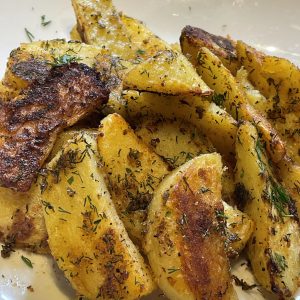
- Serve this with our Tzatziki and a big tray of Greek Lemon Potatoes and you’ve got dinner handled.
Notes
Do You Really Need Skewers for Chicken Souvlaki?
No. Skewers help with handling, but they are not required for flavour or texture.
This is where Jody’s brother comes in. He refuses to skewer anything. Claims it slows him down. Calls them “shish-less kebabs” with full confidence.
And he’s not wrong.
When you cook the chicken directly on a tray or grill, you get better surface contact. More browning. More flavour. Less fiddling.
Skewers vs No Skewers
On the other hand, Kirstie’s friend Jen’s signature camping meal is her Greek supper, and what makes it so delicious is that the chicken is skewered, and cooked over an open fire grill. Part of the joy of the meal for adults & kids alike is eating the meat right off the stick.
Use skewers if:
- You want that classic presentation
- You’re cooking over open grill grates
- You like turning everything at once
Skip them if:
- You want faster prep
- You’re roasting in the oven
- You want maximum caramelization
We do both. Depends on the day. Depends on how many people are watching us.
Why This Chicken Souvlaki Works (The Science Bit That Matters)
This method works because of salt timing, surface area, and high heat cooking.
Let’s break it down in real terms.
Salt First, Always
Salt pulls moisture to the surface, then reabsorbs it, seasoning the chicken all the way through. That 20 to 30 minute rest at room temperature is key. It acts like a quick brine.
Even Cuts = Even Cooking
If your pieces are all over the place, so is your doneness. Small pieces dry out. Big ones stay raw. Keep them uniform and everything finishes together.
High Heat = Browning
That golden colour is not just for looks. It’s flavour. The Maillard reaction happens when the surface gets hot enough to brown proteins and sugars.
Translation. Hot grill. Hot oven. No crowding.
Oil Helps, But Not Too Much
A little olive oil helps with heat transfer and prevents sticking. Too much and you steam instead of sear.
What to Serve with Chicken Souvlaki
Chicken souvlaki shines when paired with bright, fresh, and slightly tangy sides.
We rarely serve this alone.
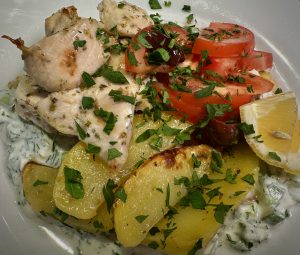
Our Go-To Plate
- Tzatziki for cooling contrast
- Greek Lemon Potatoes for that crispy, lemony hit
- Warm pita or flatbread
- Simple tomato and cucumber salad or try our Creamy Greek Green Dressing!
If you want to go full experience, this is exactly the kind of menu we teach in our Greek BBQ Pork Souvlaki & Grilled Calamari Class. Same techniques. Same results at home.
Jody and Kirstie’s Hot Tips
- Cut bigger than you think. Chicken shrinks as it cooks.
- Do not overcrowd the pan. Give each piece space or you lose browning.
- Let the chicken sit before cooking. Cold chicken straight from the fridge cooks unevenly.
- Flip less than you think. Let it develop colour before touching it.
- Finish with lemon at the end, not during cooking. Acid too early can tighten the protein.
Substitutions
- Chicken thighs instead of breast for more richness and forgiveness
- Fresh oregano instead of dried, just double the amount
- Add a touch of yogurt to the marinade for extra tenderness
- Swap parsley for dill or mint for a different herb profile
What to Know or Avoid
- Do not skip the salt. It is not optional here
- Do not cook on low heat. You will dry it out
- Do not cut uneven pieces. This is the biggest mistake we see
- Do not drown it in marinade. This is not a wet marinade situation
Storage
Cooked chicken souvlaki keeps well in the fridge for up to 3 days. Friend Jen marinates and freezes the cubed chicken, so at the campsite it’s just skewer & grill.
Reheat gently in a pan or oven. Avoid the microwave if you can. It tightens the protein and dries it out.
Cold leftovers also make a great wrap or salad situation the next day.
FAQ
Can I make Chicken Souvlaki ahead of time?
Yes. Marinate up to overnight in the fridge. Let it sit at room temperature for 20 minutes before cooking. See above for Jen’s camping trick.
Can I bake instead of grill?
Yes. Roast at high heat on a parchment-lined tray for 10 to 12 minutes.
Is chicken breast or thigh better?
Both work. Breast is leaner. Thigh is juicier and more forgiving.
Why is my chicken dry?
Most likely overcooked or cut too small. Use even pieces and high heat.
Do I need to soak bamboo skewers?
If grilling, yes. Soak for 20 minutes to prevent burning. Fun fact: every Middle Easter (halal) grocery store carries really fantastic metal & wood/bamboo skewers for grilling, such as Ammar Halal Meats.
Key Takeaways
- Chicken souvlaki is about technique, not complexity
- You do not need skewers to get great results
- Salt and rest time make a huge difference
- High heat creates flavour through browning
- Even cutting is the difference between good and great