This post contains affiliate links
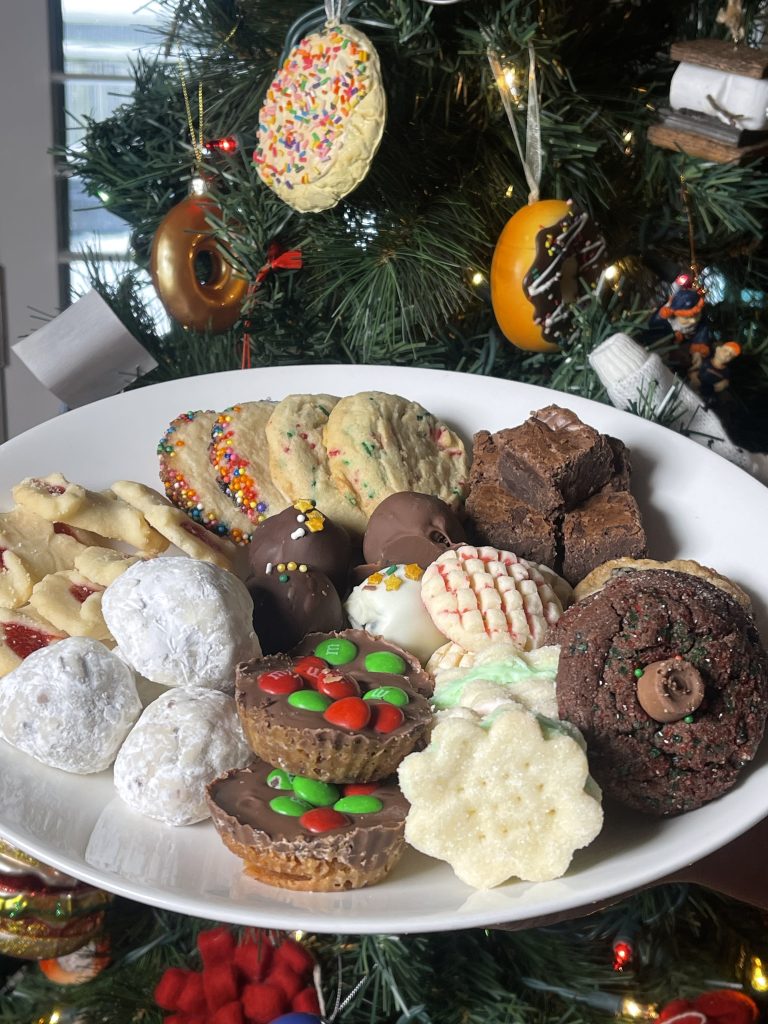
This Blog is dedicated to the Woolwich Hockey Moms and all your future Cookie Exchange Endeavours.
You know that moment when you agree, so casually, to join a cookie exchange…and then immediately regret every life choice that brought you here? We see you, and we got you!
Let me draw the scene: The butter is softening on the counter, you are convincing yourself that you have plenty of time and that baking a simple batch of cookies is no big deal. Forty-five minutes later, you are elbow-deep in dough, staring at a tray of misshapen, slightly tragic blobs. Without hesitation, you fire off a text to the group chat:
“Effing cookies! If they suck, lie to me. I don’t want to know. I’m also bringing the rejects (to the exchange) if anyone wants some. They taste good but look like shit….I need wine!”
If you know, you know.
The truth is, cookies are deceiving. They look innocent. They look fun. They look like something you can casually whip up while humming along to holiday music. But cookies? Cookies have opinions, Cookies have moods. Cooking can turn on you.
And that is why understanding the elements of a good cookie is the difference between showing up to that exchange with confidence…or showing up with an emotional support bottle of cabernet.
Today, we are diving deep into what makes a truly great cookie: crispy edges, chewy centres, butter flavour, perfect spread and all the magic in between.
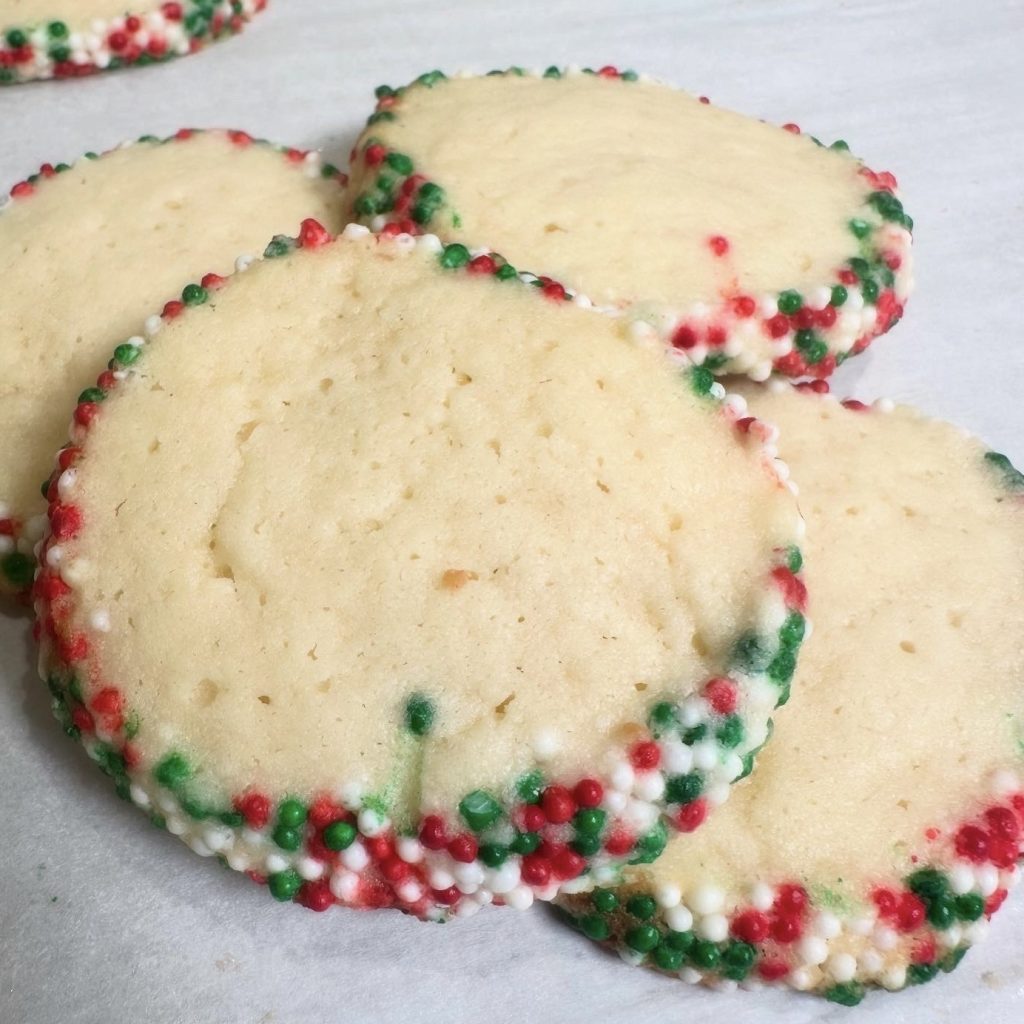
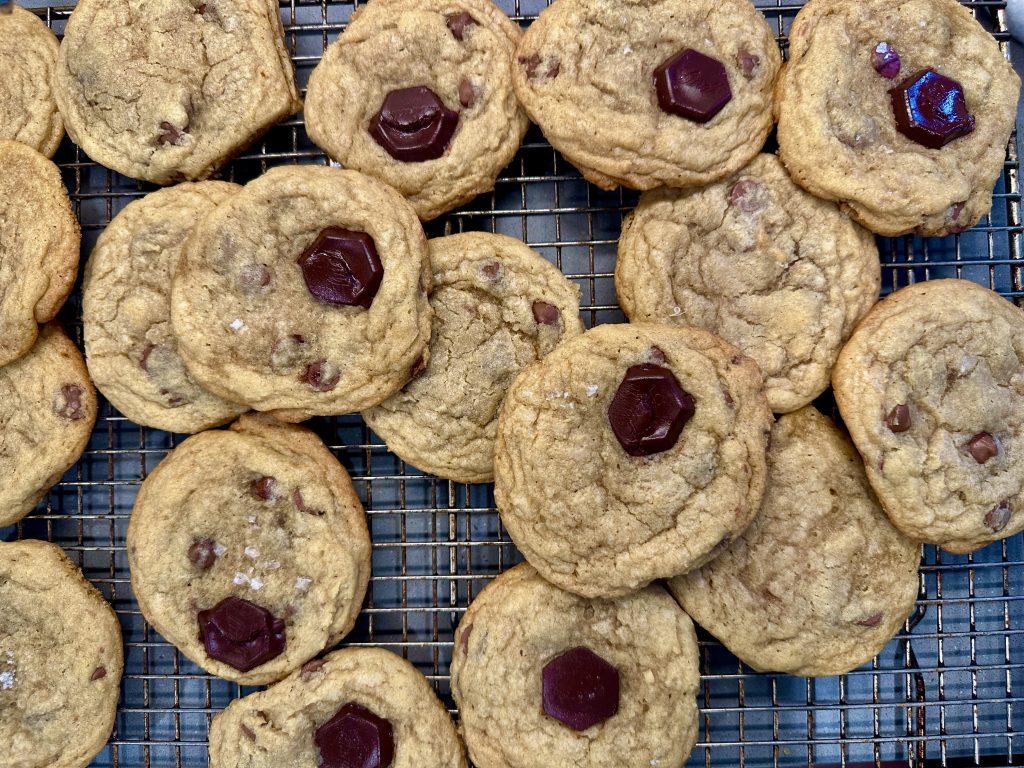
If you want tried and true recipes that have been tested and will work for you, check out our Shortbread Sprinkle Cookies or our Chocolate Chip Cookies recipes.
Let’s bake cookies you are proud to share, and that won’t trigger a group chat meltdown.
Ingredient Breakdown: What Each Ingredient Brings to your Cookie
Use this as your troubleshooting guide. If your cookies came out too crispy, not crispy enough, too puffy, too flat, not flavourful, too sweet. This is where you will find the fix.
1. Crispy Edges
- Ingredients: Sugar (especially white sugar) and butter.
- Tip: Increase white sugar for more crispness, and bake at a slightly higher temperature to help the edges set before the centers.
2. Chewy Center
- Ingredients: Brown sugar, egg yolks, and moisture from butter.
- Tip: Use more brown sugar than white, as it adds moisture and chew. Adding an extra yolk or using melted butter also boosts chewiness.
3. Buttery Flavour
- Ingredient: Quality butter or high-quality substitutes like European-style butter.
- Tip: Use fresh, unsalted butter for a rich flavour, and avoid overmixing it into the dough to preserve that distinct taste.
4. Sweetness Level
- Ingredients: White and brown sugars.
- Tip: Adjust the sugar balance based on desired sweetness. Use more brown sugar for a softer sweetness or less sugar overall for a less sweet result.
5. Thickness
- Ingredients: Baking powder, flour, and chilling the dough.
- Tip: Add a touch more baking powder for thicker cookies, use slightly more flour for structure, and chill the dough to reduce spreading.
6. Spread
- Ingredients: Butter (melted for more spread, softened for less), flour, and sugar ratio.
- Tip: Melted butter increases spread, while more flour reduces it. To reduce the spread, you can also chill the dough.
7. Density
- Ingredients: Flour and egg yolks.
- Tip: More flour makes the cookies denser, as does using only yolks (instead of whole eggs). Lower oven temperatures also make for thicker, denser cookies.
8. Texture Variation
- Ingredients: Sugars, baking soda, and add-ins.
- Tip: A mix of sugars adds both chewiness and crispiness. Adding slightly under-baked add-ins like chocolate chunks gives gooey bites within a firm cookie.
9. Melt-in-the-Mouth
- Ingredient: Cornstarch, powdered sugar, or high-fat content butter.
- Tip: Adding cornstarch or using powdered sugar creates a softer texture. Shortening also contributes to a more tender mouthfeel.
10. Colour
- Ingredient: Sugars and browned butter.
- Tip: Brown sugar and baking at a slightly higher temperature help achieve a golden colour. Browned butter can also add deeper caramel tones.
11. Moisture Level
- Ingredients: Brown sugar, honey, molasses, and butter.
- Tip: For moist cookies, use more brown sugar, add a touch of honey or molasses, and bake for slightly less time.
12. Chocolate Meltiness
- Ingredients: Chocolate chips, chunks, or bar chocolate.
- Tip: Use high-quality chocolate chunks or chopped bars for better meltiness, and add them just before baking for ideal distribution.
13. Flavour Balance
- Ingredients: Salt, vanilla, chocolate, and spices.
- Tip: A pinch of salt enhances the sweet flavours, while vanilla and a mix of sugars create a more complex taste.
14. Aroma
- Ingredients: Vanilla extract, spices, browned butter.
- Tip: Freshly toasted spices, high-quality vanilla extract, or browned butter boost the fragrance.
15. Saltiness
- Ingredient: Salt.
- Tip: Use kosher salt for a subtle balance, and sprinkle a little on top before baking for a heightened sweet-salty combo.
16. Mouthfeel
- Ingredients: Sugars, fats, and add-ins like chocolate or nuts.
- Tip: Adjust sugars for a smoother texture, add fats for richness, and use larger chunks for texture.
17. Add-Ins
- Ingredients: Chocolate chunks, nuts, dried fruit.
- Tip: Ensure that add-ins are well-coated in flour before folding them in to prevent sinking, and mix gently for even distribution.
18. Bite Resistance
- Ingredients: Sugar (white or brown), flour, and butter.
- Tip: Brown sugar creates a chewy cookie with some resistance, while white sugar will create more of a snap.
19. Gloss or Matte Finish
- Ingredient: Sugars, especially brown or turbinado sugar.
- Tip: For gloss, use more brown sugar and slightly underbake; for a matte finish, use granulated sugar and bake a bit longer.
20. Aftertaste
- Ingredients: Salt, quality chocolate, spices, and vanilla.
- Tip: Use a pinch of salt and high-quality vanilla to leave a pleasant, lingering taste.
Substitutions
Butter
- My instinct as a Chef is to say DO NOT SUBSTITUTE but…
- Swap with margarine or shortening, expect less flavour & a different texture.
- European butter = richer, deeper flavour
Sugar
- Brown Sugar→ add molasses to white sugar
- White Sugar → coconut sugar for caramel notes cookies will spread less)
Flour
- All-purpose flour → pastry flour for more tenderness.
- Gluten-free → use cup-for-cup gluten-free blend
Add-Ins
- Nuts → Seeds
- Chocolate →. Chopped bars, chips, smarties or m&ms
- Dried Fruit → rehydrate for juicier texture
What to Know / Avoid in This Recipe
- Don’t overmix once the flour is added, there is nothing worse than tough cookies
- Weight your ingredients, especially the flour
- Chill the dough, if your cookies are spreading too much.
- Use parchment, not an unlined baking sheet.
- Rotate the tray halfway for even browning.
Storage Recommendations
Room Temperature: 4-5 days in an airtight container
Freeze baked cookies: Up to 3 months
Freeze dough balls: Up to 6 months (freeze in a bag and bake from frozen)
FAQ
Why are my cookies flat?
Your butter was too warm, or you did not chill the dough.
Why are my cookies too cakey?
Too much flour or too much leavening.
Why don’t my cookies brown?
Your oven temp is too low, or you are using too much light brown sugar.
Why did my cookies dry out?
Overcooking. Always pull cookies when the centre looks pale and slightly underdone