
This post contains affiliate links
TL;DR: Korean glass noodles are made from sweet potato starch, which makes them naturally gluten-free, satisfyingly chewy, and unlike any other noodle when served cold. This japchae-style salad comes together in 20 minutes and tastes even better the next day.
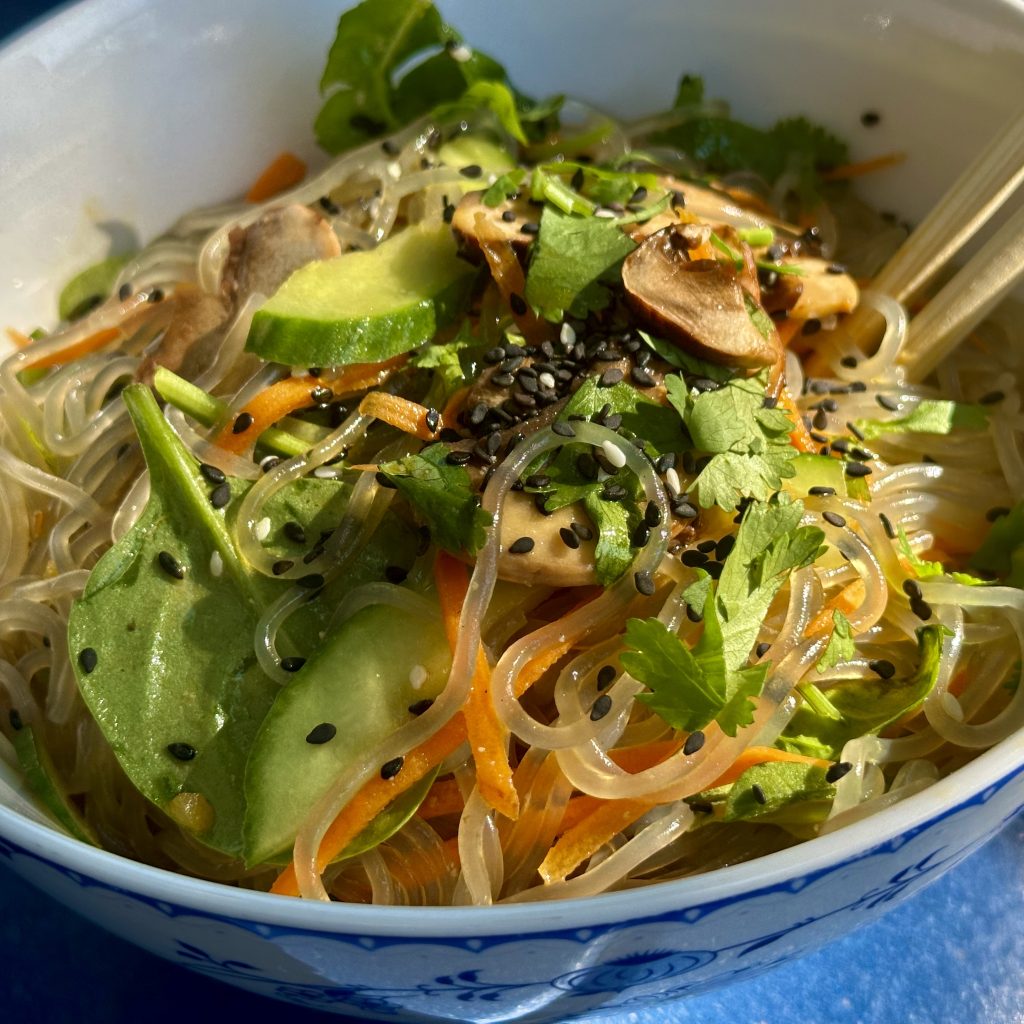
Some recipes happen because conditions are perfect. This one happened because it was 30 degrees by 10 a.m., the oven was not an option, and there was a package of sweet potato noodles in the pantry waiting for a purpose. We are Jody and Kirstie, two Red Seal chefs and co-owners of The Culinary Studio, and this Korean glass noodle salad is now a permanent fixture in our summer rotation. Bold miso-sesame dressing, crunchy vegetables, springy noodles, and zero oven time. That is the whole pitch.
What Are Korean Glass Noodles?
Korean glass noodles, also called sweet potato noodles or dangmyeon, are made entirely from sweet potato starch and water. That is it. No wheat, no gluten, no egg. When raw they look grey and opaque. Once cooked, they turn translucent and glassy, which is where the name comes from.
They are the noodle used in traditional japchae, a classic Korean stir-fried noodle dish with vegetables and sesame. This salad borrows that flavour foundation and serves it cold, which makes it one of the best hot-weather meals we know.
You can find sweet potato noodles at Asian grocery stores, T&T Supermarket, and increasingly at well-stocked mainstream grocery stores. They keep indefinitely in your pantry until opened.
Kitchen Science: Why Sweet Potato Noodles Work Cold
Most noodles turn into a clumpy, gluey mess when they cool down. Sweet potato noodles do not, and the reason is in the starch.
Wheat noodles are high in gluten, a protein network that tightens and stiffens as it cools. Sweet potato starch has a completely different structure. It is high in amylopectin, a branched starch molecule that stays flexible and springy even at cold temperatures. That is why these noodles stay chewy and slippery when served cold instead of turning into a dense brick.
The cold water rinse after cooking matters too. It stops the cooking process immediately, sets that chewy texture, and removes excess surface starch that would otherwise make the noodles stick together. Do not skip it and do not be gentle about it. Rinse until the noodles are genuinely cold all the way through.
Tossing with a small amount of sesame oil right after draining is the final insurance policy. It coats each noodle individually and prevents clumping while you prep everything else.
Do You Have to Soak Korean Sweet Potato Noodles?
No soaking required. Sweet potato noodles cook directly in boiling water in six to eight minutes. Some packages suggest a short soak to reduce cooking time slightly, but it is not necessary and makes no real difference to the final texture. Boiling water, six to eight minutes, cold rinse. That is the whole process.
How to Make Korean Glass Noodle Salad
The dressing is the backbone of this recipe. Miso, rice wine vinegar, soy sauce, sesame oil, a touch of sugar, and chili garlic paste. It is a balancing act of salty, sour, sweet, and umami that clings beautifully to the springy noodles. Mix it in a jar and shake. It takes two minutes and keeps in the fridge for a week.
The mushrooms get a quick marinade in soy sauce and sesame oil before going into the salad. Everything else, carrot, cucumber, red pepper, spinach, is raw. The contrast between the soft noodles, the marinated mushrooms, and the crunchy raw vegetables is exactly the point.
A note on the dressing: miso can be stubborn to dissolve. Give it patience and whisk well, or use a jar and shake hard. Lumpy dressing is the only real mistake you can make here.
Print


I subscribe the updates and get links to recipes - I recently made the Olive Oil Lemon cake. It turned out delicious – as you said in the description, very moist! My daughter has a birthday in strawberry season and typically she asks for strawberry shortcake with a traditional shortcake recipe… I served the lemon came this weekend with a bit of whipping cream and fresh strawberries (your picture was quite enticing) and her comment was that her birthday request this year would be to replace the traditional shortcake with this recipe!


I made Dan Dan noodles last month and again referred to the recording as it has been awhile. I was grateful for the reminders, tips and tricks. Not to mention, I love to cook with Kirstie and Jody. They make it so much fun!
Most of the meals I make are from your repertoire. I think I have close to 60!


You will learn delicious recipes taught in real time from start to end by two good friends who want nothing more than to teach you how to cook and and have fun doing it. Class presentation is practical and encouraging with one chef starting and one playing 'catch up' so you do not miss anything and no question will go unanswered!
The recipe with food pack is perfectly packaged and always arrives on time to make it easy so you do not have to shop!
Several recipes from the Culinary Studio are in our regular rotation!
Excited to keep cooking with you Kirstie and Jody!

I was at the Studio for the very first class they held and I have continued to take classes for the past 13 years. While some things have changed over the years, the quality, knowledge and skills Jody and Kirstie bring to each class has not.The skills I learned through the their instruction have been used daily.

- Prep Time: 15 minutes
- Cook Time: 5 Minutes
- Total Time: 20 Minutes
- Yield: 4–6 Servings 1x
Ingredients
- 1 package (400g) sweet potato noodles (a.k.a. Korean glass noodles or japchae noodles)
- 1 tsp sesame oil (for tossing noodles)
- 3 Tbsp white miso
- 1/4 cup rice wine vinegar
- 1/8 cup sugar
- 1 1/2 Tbsp soy sauce
- 1 1/2 Tbsp sesame oil
- 1/2–1 tsp chili garlic paste (adjust to taste)
- 2 cups sliced mushrooms
- 1 Tbsp soy sauce
- 1 tsp sesame oil
- 1 carrot, julienned
- 1 English cucumber, julienned
- 1 red pepper, julienned
- Handful of baby spinach
- 4 green onions, thinly sliced
- 1/4 cup sesame seeds
- Handful of chopped cilantro
- Juice of 1 lime, quartered
Instructions
- Cook the noodles: Bring a large pot of water to a boil. Add sweet potato noodles and cook according to package instructions (typically 6–8 minutes). Drain, rinse under cold water until really cold, shake well to rid of excess water and toss with 1 tsp sesame oil to prevent sticking. Set aside.
- Make the vinaigrette: In a small bowl or jar, whisk together the miso, rice vinegar, sugar, soy sauce, sesame oil, and chili garlic paste until smooth and well blended. Taste and adjust the heat or sweetness as you like. Check out the vid below. It takes a little patience to work the miso so it’s nice & smooth.
- Marinate the mushrooms: add sliced mushrooms to second amount of soy sauce and sesame oil.
- Prep the veggies: Julienne the carrot, cucumber, and red pepper.
- Assemble the salad: In a large bowl, combine cooled noodles, mushrooms, raw veggies, and spinach. Pour over the miso-sesame vinaigrette and toss well to coat.
- Top and serve: Garnish with green onions, sesame seeds, and fresh cilantro. Serve chilled or at room temperature. Serve with a lime wedge!

Notes
Jody and Kirstie’s Hot Tips
- Double the dressing. It keeps for a week in the fridge and works as a marinade for salmon, a dressing for any Asian-style slaw, or a dipping sauce for dumplings
- Rinse until actually cold. Lukewarm is not cold enough. The texture depends on it.
- Toss with sesame oil immediately after draining. Do not wait. This is what keeps the noodles from clumping into a block.
- Make it ahead. This salad tastes better after a few hours in the fridge. The noodles absorb the dressing and the flavours deepen considerably.
- Hosting a picnic or cottage weekend? Pack everything separately and toss just before serving. Zero stress, maximum payoff.
Variations and Substitutions
Add protein. Grilled chicken is the natural partner here. Our Gochujang Grilled Chicken alongside this salad is a complete Korean-inspired dinner that comes together in under 30 minutes. The flavours were made for each other. Cold shrimp, crispy tofu, or sliced steak all work beautifully too.
Swap the vegetables. Edamame instead of mushrooms, shredded purple cabbage for extra colour, thinly sliced snap peas for crunch. This recipe is a framework, not a rulebook.
Make it gluten-free. Use tamari instead of soy sauce. The salad is already naturally gluten-free if you make that one swap.
No cilantro? Flat leaf parsley or extra green onion works fine. Or leave it out entirely.
Storage
Store leftovers in an airtight container in the fridge for up to three days. The noodles absorb more dressing as they sit, so it genuinely tastes better the next day. If the noodles clump after sitting, toss with a small splash of rice vinegar or water before serving.
Noodles can be cooked and tossed with sesame oil up to two days ahead. Dressing keeps for a week. Slice vegetables a day in advance. Final assembly takes five minutes.
FAQ
What are Korean glass noodles made of?
Korean glass noodles are made from sweet potato starch and water. They contain no wheat and no gluten, which makes them naturally gluten-free. Once cooked they turn translucent and chewy, with a springy texture that holds up beautifully when served cold.
Do you have to soak Korean sweet potato noodles before cooking?
No. Cook them directly in boiling water for six to eight minutes. Some packages suggest an optional soak to shorten cooking time, but it is not necessary. The more important step is the cold water rinse immediately after cooking, which sets the chewy texture and removes excess surface starch.
What are common mistakes when making japchae?
The three most common mistakes are skipping the cold rinse (leaves you with gluey noodles), not tossing with sesame oil immediately after draining (leads to clumping), and under-seasoning the dressing (miso needs to be fully dissolved or the flavour is uneven). Taste and adjust the dressing before it goes on the noodles.
Are japchae noodles supposed to be cold?
Traditional japchae is served warm or at room temperature. This recipe is a cold salad variation, and the sweet potato starch structure makes these noodles one of the only noodles that actually improve when served cold. They stay chewy and springy instead of stiffening up the way wheat noodles do.
How do you keep glass noodles from sticking together?
Two steps: rinse thoroughly under cold water immediately after cooking, then toss with a small amount of sesame oil while still wet. That oil coating is what keeps each noodle separate. If they clump after sitting in the fridge, a small splash of rice vinegar or water loosens them right back up.
Key Takeaways
- Sweet potato noodles are made from sweet potato starch, which is why they stay chewy and springy when served cold instead of going gluey.
- The cold water rinse is not optional. It sets the texture and removes excess starch.
- Toss with sesame oil immediately after draining to prevent clumping.
- Double the dressing. It keeps for a week and works on everything from salmon to slaw.
- This salad is better the next day. Make it ahead without hesitation.
Serve this alongside our Gochujang Grilled Chicken for a complete Korean-inspired summer dinner that is ready in under 30 minutes.


