This post contains affiliate links
We’re here to answer some questions and clear up some misnomers when it comes to making soup. What is the difference between stock & broth anyway? What is better? Can I substitute broth for stock when making soup? What about bouillon? Is that the same as stock or broth? Finally, what really is bone broth?
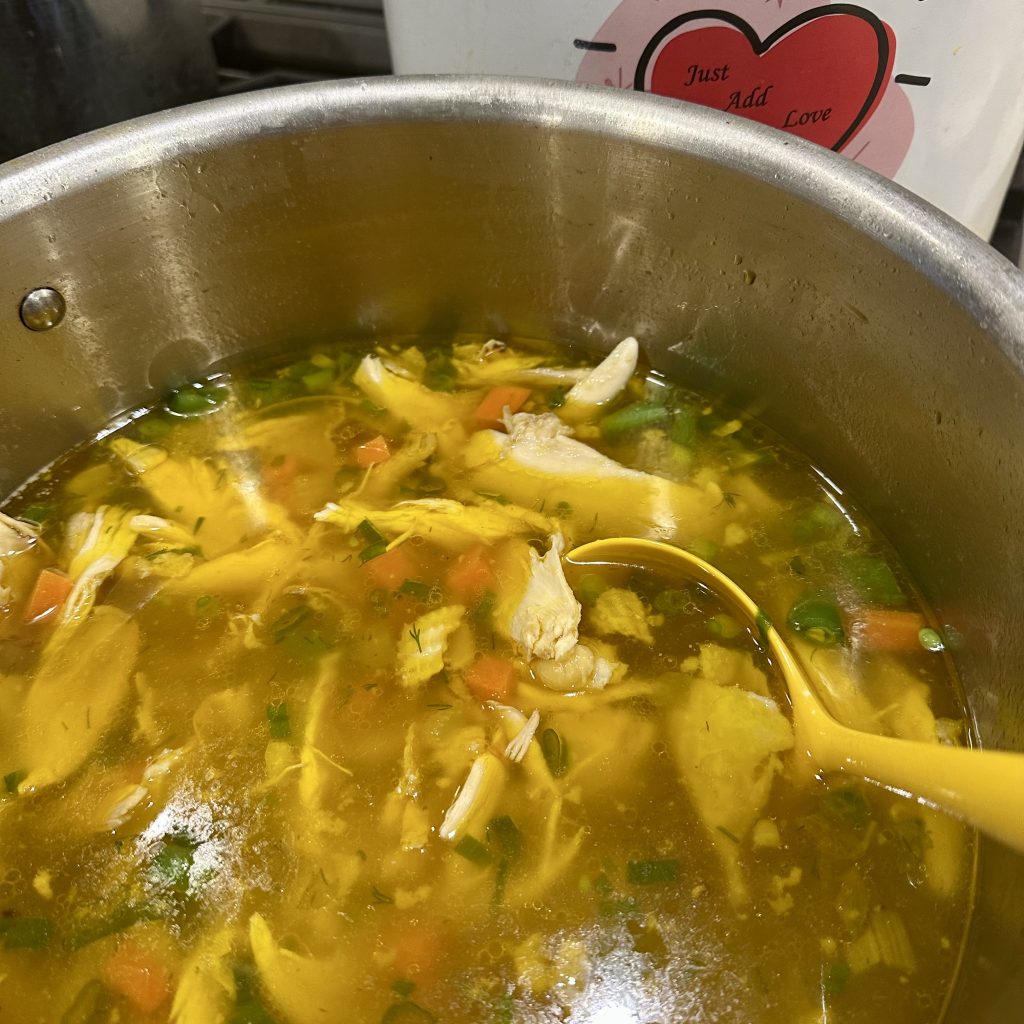
When it comes down to it we truly believe that if you are cooking from scratch, then you are leaps and bounds ahead of using sodium-drenched, flavourless stock or broth for your cooking. Read on to find out why, and find our Basic Chicken Stock Recipe below!
What is the difference between Stock & Broth:
In its most basic form, stock is made from bones and broth is made from meat. They also differ in how they are used. Stock is often made in large batches and used in a variety of recipes to add body and flavour, while broth is made for a specific recipe.
Cooking time can differ between stocks and broths. Stocks are often simmered longer (the larger the animal, the longer the cooking time; i.e. beef stock is often cooked up to 4-6 hours, whereas a fish stock is ready in as little as 45 minutes).
The final texture, or viscosity, of stock and broth can differ. Because stock is made primarily with a packed pot full of gelatinous bones, the result can be a thicker, more viscous product. Good stock should almost be solid when cold. Broth can also do this, but is often lighter in texture.
The flavour difference between stock & broth comes down to adding salt. When we make stock we generally do not season it with salt at all, as we do not know what it’s future use will be: if it is reduced for a sauce for instance, it would be too salty. If it is used along with soy sauce for a stir-fry, it would be too salty. When making a broth, as discussed above, we generally know what the outcome will be, so we can season lightly at the start of the cooking process to bring the flavour out of the meat.
What is better? Stock or Broth:
We don’t think that one is necessarily better than the other, it depends on the use. But at the end of the day, there is nothing a litre of stock can’t do, even if it’s just to sip on as hot afternoon pick-me up on a cold day. And you can really make stock out of anything: don’t throw away the bones of your grocery store chicken, make a stock! Even though the bones are cooked, you will still get a flavourful liquid. The cooked bones from a turkey carcass provide an excellent, gelatinous end product.
Can I substitute stock instead of broth?
Yes, you can substitute stock for broth, but the difference in texture and flavour may slightly affect your dish. Here are a couple things to keep in mind:
Flavour Intensity: Stock tends to have a deeper, more robust flavour, while broth is lighter. The good news is, if you’re substituting stock for broth in a recipe you have the ability to stretch it further by diluting the stock slightly with water to match the lighter flavour of broth.
Salt Content: Many broths come pre-seasoned with salt, while stock is often unsalted. If you’re using stock in place of broth, be mindful of seasoning and adjust accordingly to suit your taste. In most cases, substituting broth for stock will work fine, and you can adjust the seasoning or texture as needed to match your recipe.
What about bouillon? Is that the same as stock or broth?
As unofficial GITs (Grandma’s In Training) you can probably guess our answer: Bouillon offers a quick and convenient way to add flavour to dishes, but because it’s concentrated and pre-seasoned, it can be saltier and more artificial in taste than fresh stock or broth. Like waaaay saltier and more artificial-tasting.
Stock/Broth on the other hand, provides a fresher, more natural taste, is highly nutrient-dense, and can be customized to a recipe’s needs. It’s more versatile in terms of how it’s seasoned and used. Thankfully, if you don’t have the time to make a pot of stock, a lot of local butcher shops, such as Fore Quarter Butcher Shop are utilizing all of the bones they have to make really fantastic, gelatinous stocks.
‘Stock up’ your freezer 🙂
Is Bone Broth the Same as Stock?
Although made from very similar ingredients, bone broth is primarily used as more of a health drink as opposed to an ingredient in recipes.
Here’s why: Bone Broth is made with animal bones and may include a small amount of meat, vegetables, and sometimes vinegar or an acid.
The acid helps extract nutrients like collagen and minerals from the bones.
Stock: Also made from bones (often with some meat), but it generally includes vegetables (like carrots, onions, and celery) and aromatics. Vinegar or acid is less commonly used.
Bone Broth is simmered for a much longer time, usually up to 12 to 24 hours (or more), to fully extract nutrients like collagen and minerals from the bones.
Stock: Simmered for a shorter period, anywhere from 1 to 6 hours depending on the size of the bones. While it still extracts flavour and some collagen, stock doesn’t extract as many nutrients as bone broth due to the shorter cooking time. The consistency and texture of bone broth & stock can be similar (i.e. gelatinous when chilled), but technically bone broth even more so due to the acid bringing out more gelatin from the bones. It also comes down to the quality of bones you start with!
Bone broth is popular as a health drink, and many people sip it for joint and gut health. It’s frequently consumed on its own as a nourishing drink, whereas stock is used as a base for soups, stews and sauces.
To sum this all up:
Stock: Commonly used as a base for soups, sauces, and stews, where it provides a rich background flavour.
Broth: Can be consumed directly as a soup or used in recipes where a lighter, more subtle liquid is needed.
Basic Chicken Stock Recipe:
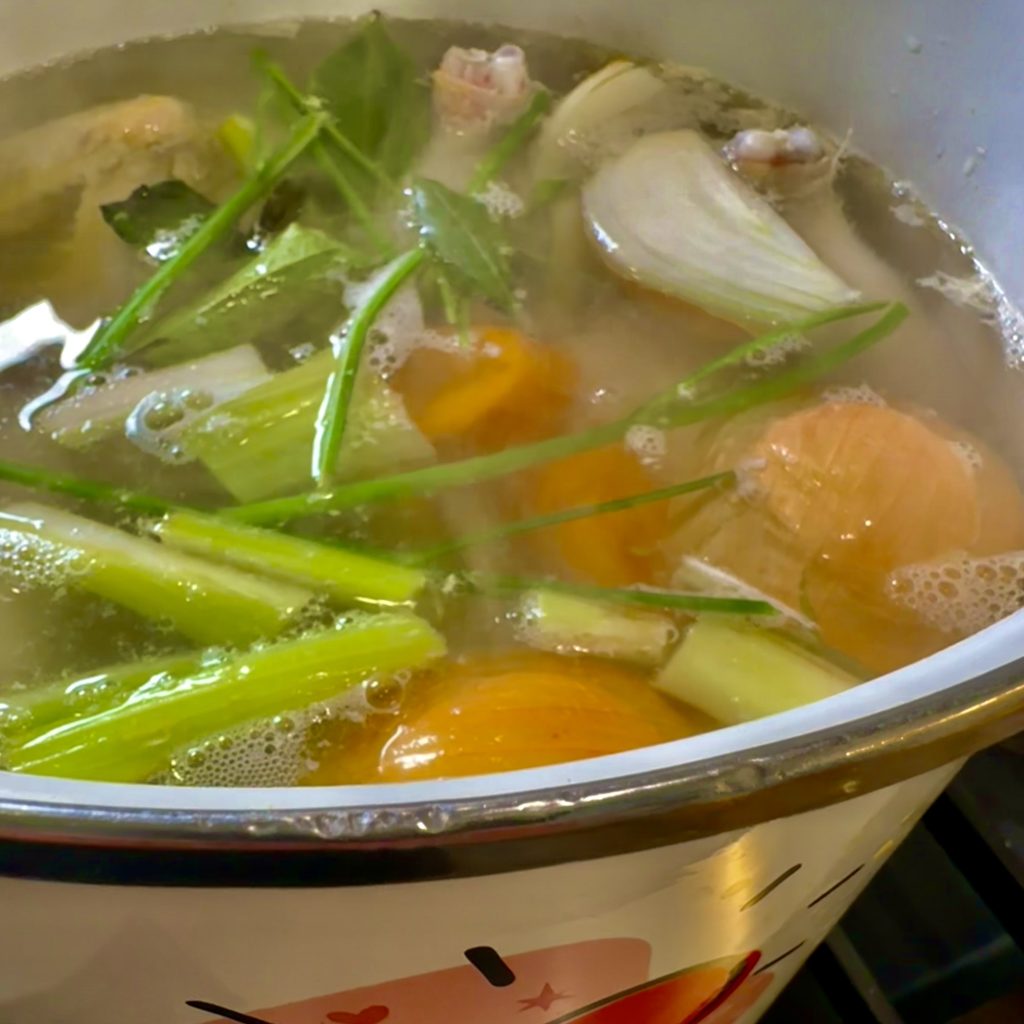
We’ve got a few basic rules when it comes to stock making. Don’t stir it, don’t cover it, never let it keep boiling. Also, the stock pot is not your garbage bin. Vegetables should be limited to clean aromatics (i.e. no cloudy vegetables like potatoes or potato peels, nothing too strong like broccoli or peppers…).
This makes 2-3 L of stock, you can definitely double or triple the recipe.
2-3 lbs chicken bones
Cold Water to cover
1 large onion, roughly chopped
1 medium carrot, roughly chopped
1 large celery, roughly chopped
Fresh or dried herbs such as thyme, rosemary and parsley (optional)
2 bay leaves
- Place the chicken bones in a pot just large enough to hold them.
- Cover with cold water.
- Bring just up to a boil over high heat. Immediately reduce heat to low and skim any foamy scum that rises to the surface (a ladle works well for this).
- Add vegetables and herbs. Do not stir.
- Simmer, uncovered and without stirring for 1-2 hours.
- Strain into a large bowl or container.
- Cool down into smaller containers that freeze well.
- Use stock to make soups and sauces.
- *Notice that we do not add salt to this stock, as it can be used for various things, which we will season at the end.
Basic Turkey Stock Recipe
The holidays are over and you’re left with the turkey carcass (or you claimed it before dinner at your in-laws). Now what? The good news is that making turkey stock could not be easier. You’re starting with cooked bones, but because of their age and size, there is still plenty of gelatin and flavour going on in their. No need for vegetables either. This stock is flavourful enough and heading onto other better things. ,
1 turkey carcass
Cold water to cover
a couple bay leaves, optional
- Add the carcass to a large pot. Breaking the carcass up into smaller pieces is ideal so that you achieve a more concentrated stock.
- Cover with cold water.
- Bring up to the boil over high heat. Skim any foam or scum that rises to the surface.
- Add in bay leaves, reduce heat to low and simmer for 2 hours.
- Strain and use as required.
Make-Ahead Turkey Stock for Gravy (Wings, Tips, and Neck)
Want more gravy than anyone at your table can eat? Start the day before. When we cook our turkey, we take the wings off and use them with the wing tips and neck to make a small, rich stock. The wing tips always dry out anyways and most people do not know what to do with the neck. This puts them both to work.
The secret is browning. We brown the pieces in the pot before the water goes in, which gives you the same deep, roasted flavour you would get from the bottom of the roasting pan. No need to deglaze. The cold water picks up all those browned bit as it heats.
Wings, wing tips and neck from 1 turkey
A drizzle of olive oil or a knob of butter
2 L cold water
Mirepoix (2 onions, 1 carrot, 1 celery)
Optional (2 bay leaves, thyme and parsley stems)
- Heat a little olive oil or butter in your stockpot over medium high heat.
- Brown the wings, wing tips and neck well on all sides. Take your time here.
- Pour in cold water. Add
- Bring the post up to a boil, then immediately reduce to low. Skim any foam that rises to the surface.
- Add mirepoix and aromatics (if using).
- Simmer, uncoverd and without stirring for 1-1 1/2 hours
- Strain, cool and refrigerate until you are ready to make your gravy.
Chef’s Tip: We make this stock the day before while the turkey roasts or smokes. On the big day, half the gravy work is already done. Find our full gravy method on our How to Cook Turkey Guide.
In the mood to make soup?? Cook along with us and gain a real understanding of making soups and stock with our Soup, Stock & Gumbo Class! This online cooking class is an essential for any home cook!