
This post contains affiliate links
We often talk about Kitchen Inspiration on Chef Over Your Shoulder, but sometimes that inspiration is blocked by a crowded cupboard. In previous podcasts, we talked about “unitaskers” or those kitchen gadgets that only do one job and then take up space for the rest of the year.
LISTEN TO THE FULL EPISODE HERE!
We are here to tell you that the wok does not belong in that category. While it is the ultimate pan for the stir fry, its unique shape makes it a great tool for so much more. The wide surface area and high sides make it perfect for making a large batch of pasta. The shape also makes it ideal for deep frying because you can use less oil than a traditional pot while still having plenty of room to cook.
Cooking tips in this podcast are not just about the tools; they are about the ingredients for a stir-fry as well. Many people feel intimidated by labels they do not recognize. Finding staples like Shaoxing cooking wine is a game-changer for your next stir-fry.
When you have the right Food and the right Kitchen Tips, you no longer need to rely on the grocery store sauce aisle for a premade bottled sauce. You can create recipes that are better, fresher, and more affordable right at home.
If you have been on the fence about adding a wok to your collection, consider this your sign to go for it.
The Secret to Authentic Takeout Flavor: The Magic Four-Ingredient Sauce
Ever wonder why your homemade stir fry never quite tastes like your favourite Chinese takeout? The answer is simpler than you think. Forget the grocery store sauce aisle with its overwhelming options and mysterious ingredients. The secret to that authentic takeout flavour comes down to just four pantry staples.
The Essential Four Ingredients:
- Shaoxing cooking wine – This is the game-changer, the missing ingredient that most home cooks overlook. It adds a complex blend of saltiness and sweetness that creates that unmistakable takeout aroma and taste.
- Oyster sauce – Provides umami depth and a subtle sweetness that complements the other flavours perfectly.
- Soy sauce – The salty backbone that ties everything together.
- Sesame oil – Adds a nutty, aromatic finish that makes everything taste restaurant-quality.
When you mix these four ingredients together, you create what Kirstie and Jody call “the magic formula.” This sauce works double duty; some of it marinates your protein, while the rest becomes the finishing sauce that coats everything at the end. It is that simple, and it is that delicious.
The best part? Once you have these ingredients in your pantry, you are always just minutes away from a better-than-takeout meal. No more settling for bottled stir-fry sauces that cost more and taste less authentic.

How to Make Stir Fry in Less Than Two Minutes (Plus Prep Time)
Once you understand the basic steps, you can have a complete stir-fry on the table faster than you could have it delivered.
Here is the simple process:
1. Get your wok hot. This is crucial. You want to preheat your wok just like you preheat your oven or bbq. A hot wok means better flavour and texture.
2. Mix your sauce. Combine your four ingredients. You will find the exact ratios in our recipes, but do not stress, this formula is forgiving.
3. Chop your vegetables. This is where restraint becomes your friend. Choose just one or two vegetables. Not five. Not everything in your fridge drawer. Just one or two. Think broccoli and onion. Or celery, cabbage, and carrot. Keep it simple.
4. Slice your protein. Beef, chicken, pork, or tofu, whatever you prefer. Slice it thin for the best texture.
5. Marinate the meat. Take some of your sauce and mix it with your sliced protein, and add some cornstarch. It helps create that glossy coating you see in restaurant dishes.
6. The dance. This is Kirstie’s term for the in-and-out cooking method. You will cook ingredients separately, removing them as they finish, then bringing everything back together at the end.
7. Sauce and serve. Return everything to the wok, add your remaining sauce, toss everything together, and serve over rice or noodles.
That is it. The entire cooking process takes just minutes. The key is having everything prepped and ready to go before you start cooking, because once you begin, it moves fast.
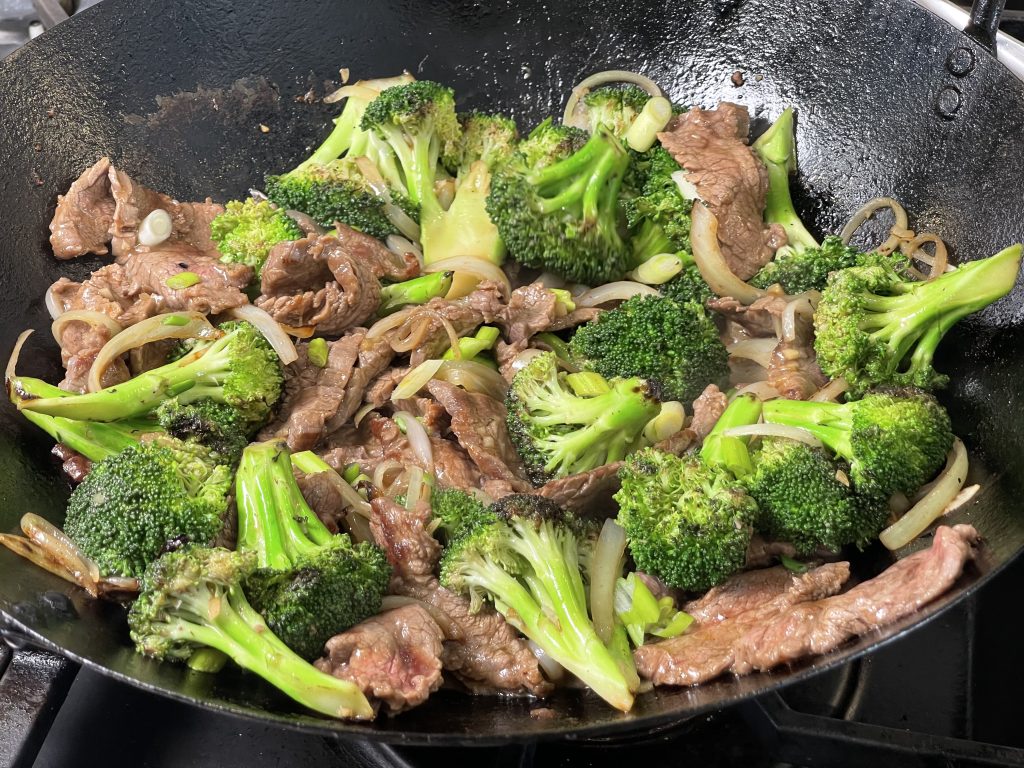
Want to put the techniques into practice? Try our Easy Beef and Broccoli Stir-fry – Better Than Takeout – it is the perfect starting point!
The Velveting Technique: The Science Behind Restaurant-Tender Meat
Have you ever wondered why restaurant stir-fry meat is so ridiculously tender? So soft it almost melts in your mouth? The secret is a technique called velveting, and once you understand the science behind it, you will never go back to regular stir-fry meat again.
What Is Velveting?
Velveting is a Chinese cooking technique where you treat thinly sliced meat with a small amount of baking soda and water before cooking. It sounds almost too simple to work, but the results are transformative.
The Science Behind Velveting
When proteins cook, they undergo a process called denaturation. The protein molecules unwind from their natural state, then coil back up and bond tightly together. As they form these tight bonds, they squeeze out moisture, which is why overcooked meat becomes tough, dry, and chewy.
This is where the genius of velveting comes in. Baking soda is alkaline, and when you toss your thinly sliced meat with a very small amount of baking soda and water, it changes the pH of the meat’s surface. This pH change is crucial because it prevents the proteins from forming those super-tight bonds that lead to toughness.
Think of it this way: without velveting, the proteins in your meat are like a group of people squeezing together as tightly as possible, pushing all the moisture out between them. With velveting, those same proteins can still come together when they cook, but they cannot squeeze as tightly. They stay relaxed, retain their moisture, and create that signature velvety, tender texture that makes restaurant stir-fry so special.
How to Velvet Meat at Home
The process could not be easier:
- Slice your protein very thin: about 1/4 inch thick works perfectly
- In a bowl, combine your sliced meat with a tiny amount of baking soda (we are talking about 1/4 to 1/2 teaspoon for a pound of meat)
- Add a splash of water
- Toss everything together and let it sit for 15-30 minutes
- Rinse briefly if desired (though many cooks skip this step)
- Pat dry and proceed with your stir fry as normal
A Word of Caution
The keyword here is “very small amount.” Too much baking soda can make your meat taste soapy or give it an unpleasant texture. Start with less than you think you need. You can always add a tiny bit more next time, but you cannot take it out once it is added.
Once you master velveting, you will notice the difference immediately. Your chicken will be tender. Your beef will be silky smooth. Even tougher cuts become restaurant-quality. It is one of those techniques that seems like magic but is actually just kitchen science.
Wok Hei: The Secret Flavour You Cannot Buy in a Bottle
If you have ever eaten at a great Chinese restaurant, you have tasted wok hei, even if you did not know it had a name. It is that slightly smoky, charred flavour that coats every piece of vegetable and meat. It is the flavour that makes you think, “Why does this taste so much better than when I make it at home?”
The literal translation of wok hei is “breath of the wok,” and it is the holy grail of stir-fry cooking.
What Creates Wok Hei?
Wok hei is created by intense heat. In restaurant kitchens, chefs work with burners that can reach 8,000 BTUs or higher. At these temperatures, the oil and aromatics actually vaporize slightly, creating a thin layer of smoke that billows up and over your food as you toss it. This smoke imparts a distinctive flavour that you simply cannot replicate with lower heat.
Can You Get Wok Hei at Home?
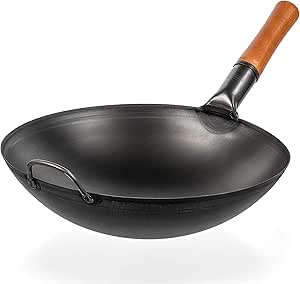
While your home stove cannot match restaurant-level heat, you can absolutely get closer to that flavour with the right equipment and technique. This is where a good carbon steel wok becomes your best friend.
How a Wok Helps You Achieve Wok Hei:
The shape matters. A traditional wok has thin sides that heat up quickly and stay hot. Unlike a flat skillet, where only the bottom gets really hot, a wok creates hot zones all over. When you toss your food up the sides, it hits metal that is almost as hot as the bottom, creating those little moments of searing and charring that build wok hei flavour.
Constant movement is key. The large surface area of a wok means you can keep everything moving. You are not just stirring your food, you are literally stir-frying it, constantly exposing new surfaces to the hottest parts of the wok. This repeated searing is what builds that complex, layered flavour.
Thin metal makes a difference. Carbon steel woks are thin, which means they heat up fast and respond quickly to temperature changes. This gives you more control and helps you maintain that crucial high heat throughout cooking.
Tips for Maximizing Wok Hei at Home:
- Get your wok screaming hot before you add oil
- Work in small batches, so you do not crowd the pan and drop the temperature
- Use the highest heat your stove can manage
- Keep the food moving constantly
- Do not be afraid of a little smoke, that is, flavour being created
- Season your wok well; a good patina adds flavour over time
Even if you cannot reach restaurant levels of wok hei, the difference between stir-fry made in a properly heated wok versus a regular pan is night and day. That little bit of char, that hint of smokiness, it is what transforms a good stir-fry into a great one.
The In-and-Out Method: Why You Should Never Cook Everything at Once
This is where most home cooks go wrong with stir-fry. You heat up your pan, dump in all your vegetables at once, add your meat, and hope for the best. The result? Some vegetables are mushy, others are still raw, the meat is overcooked, and nothing tastes quite right.
The secret that restaurant chefs know is this: a good stir fry is about restraint and technique, not volume.
Why Cook Ingredients Separately?
Every ingredient in your stir fry has different characteristics:
- Different textures – Onions are dense, zucchini is soft, carrots are hard
- Different thicknesses – Even if you cut everything the same size, the cellular structure varies
- Different water content – Some vegetables release moisture quickly, others hold it in
When you cook everything together, it is impossible to get each ingredient cooked to perfection. Some will be done before others even start cooking. By the time everything seems cooked through, you have lost the crisp-tender texture that makes stir-fry so appealing.
The Dance: How the In-and-Out Method Works
Kirstie calls this “the dance” because it is a rhythm you develop. Here is how it works:
Step 1: Sear your protein first. The bottom of the wok has direct contact with the heat—this is where you want to sear your marinated meat. Get a good brown crust on it, then remove it to a plate. It does not need to be fully cooked through; it will finish later.
Pro tip: After removing your meat, use tongs to hold a damp paper towel and quickly wipe out the wok. This removes any stuck bits without losing your heat.
Step 2: Cook aromatics. If you are using onions, garlic, or ginger, add them next. They need just a minute or two to become fragrant. Remove them.
Step 3: Cook vegetables in order of density. Start with the hardest vegetables first:
- Carrots need the most time
- Broccoli needs medium time
- Zucchini needs the least time
Cook each vegetable to about 80% done, then remove it. Remember, everything is coming back to the wok soon, so you are not looking for fully cooked vegetables yet.
Step 4: Bring everything back. Return all your cooked ingredients to the wok. Now they will finish cooking together while you add your sauce. This is when everything melds, the flavours combine, and the sauce coats each piece perfectly.
The Stir-fry Rule: Do Not Add Every Vegetable in Your Fridge
This is crucial, and Jody is passionate about it. A good stir fry showcases a few ingredients done well, not a hodgepodge of everything you have on hand.
Choose one, maybe two vegetables maximum. Not five. Not seven. Not the entire contents of your vegetable drawer. Just one or two.
Why? Because restraint creates harmony. When you add too many vegetables, you get competing textures, flavours that do not complement each other, and a final dish that tastes muddled. Plus, with so many variables, it becomes nearly impossible to cook everything properly.
Think of it like music. A beautiful song does not use every instrument in the orchestra at once. Similarly, a beautiful stir-fry does not need every vegetable you have on hand.
The One Rule That Changes Everything: Always Preheat
If there is one principle that Kirstie and Jody return to again and again, it is this: always preheat your wok before cooking.
This might seem obvious, but here is the thing—most home cooks preheat their oven without thinking twice, but they constantly forget to preheat their pans. They pour oil into a cold pan, then add their food, then wonder why everything sticks or steams instead of searing.
What Happens When You Preheat Properly
When you add vegetables to a properly heated wok with hot oil, they immediately start to sear. The surface caramelizes, creating flavour and texture. Your food develops colour, character, and that elusive wok hei.
When you add vegetables to a cold or lukewarm pan, they start to steam instead of sear. They release their moisture, the pan temperature drops further, and you end up with soggy, flavourless vegetables swimming in liquid.
How to Preheat Properly
- Place your empty wok on high heat for 2-3 minutes
- You want it hot enough that a drop of water sizzles and evaporates almost immediately
- Then add your oil and let it heat for about 30 seconds until it shimmers
- Only then add your food
This simple step, waiting for your wok to get properly hot, makes the difference between mediocre stir fry and restaurant-quality results.
Finishing Touches: The Art of the Garnish
You have cooked your perfect stir fry using all the techniques above. Your protein is velvety tender. Your vegetables are crisp yet cooked. Your sauce is glossy and flavourful. Now comes the fun part: the garnish.
But here is the key principle: restraint applies here, too. You do not need every topping. You do not need to recreate the entire condiment bar at a restaurant. Choose one or two garnishes that complement your dish and call it done.
Popular Garnish Options:
Fresh green onions – Sliced on the diagonal, these add a fresh, sharp bite that cuts through the richness of the sauce. This is Kirstie and Jody’s go-to topping for almost every stir-fry recipe.
Sesame seeds – Jody keeps a container right beside her stove because she uses them so often. They add a subtle nutty flavor and a pleasant textural contrast. Just a sprinkle is enough.
Chopped peanuts – Perfect for Thai-inspired stir fries. They add crunch and a rich, earthy flavour. Kids especially love this topping.
Cashews – These can be added during cooking (they will soak up sauce and become tender) or sprinkled on top for crunch. Kirstie has a cashew chicken recipe that showcases this beautifully.
Chili flakes – For those who like heat, a pinch of chili flakes adds spice without overwhelming the other flavours.
The Important Rule: Not All of Them
As Jody says emphatically, do not throw the entire Costco mixed nut container into your stir fry. Do not add sesame seeds AND peanuts AND cashews AND chili flakes AND three kinds of fresh herbs.
Choose one or two garnishes. That is it. This is not the place to showcase every ingredient in your pantry. This is about thoughtful, intentional finishing touches that enhance what you have already created.
Love the combination of protein, vegetables and peanuts? Our Kung Pao Chicken & Shrimp Recipe brings together everything you’ve learned with a spicy finish!
Rice or Noodles? The Great Stir-Fry Base Debate
Here is the good news: when it comes to what you serve under your stir fry, there is no wrong answer. Rice or noodles both work beautifully, and the choice comes down to what you have on hand and what you are in the mood for.
Rice Options:
- White rice – Classic and neutral, it lets the stir-fry flavour shine
- Brown rice – Adds a nutty flavor and more texture
- Jasmine rice – Fragrant and slightly sticky, perfect for Asian flavours
- Fried rice – Turn your stir fry into a complete one-pan meal
Noodle Options:
- Fresh chow mein noodles – These are Kirstie’s favorite. They have a wonderful chew and absorb sauce beautifully. The good news is they are becoming much easier to find at regular grocery stores.
- Rice noodles – Light and delicate, perfect if you want the vegetables to be the star
- Udon – Thick and chewy, these are substantial enough to make your stir fry feel like a complete meal
- Soba – Nutty buckwheat noodles add complexity
Where to Find Specialty Noodles
Kirstie made an exciting discovery recently at her local Sobeys, the international aisles are getting better and better. Many mainstream grocery stores now carry items that used to require a trip to a specialty Asian market.
However, if you have access to a TNT Supermarket or a local Asian grocery like New City Supermarket, you will find an even wider selection. These stores carry multiple types of fresh noodles, often in the refrigerated section, that can transform your stir-fry from good to exceptional.
The bottom line? Do not stress about rice versus noodles. Use what you love, what you have, or what sounds good in the moment. Stir-fry is endlessly adaptable, and that is one of its greatest strengths.
Shopping for Shaoxing Cooking Wine: Do Not Be Intimidated
One of the biggest barriers to making great stir-fry at home is simply not knowing what to buy. As Kirstie points out, sometimes it is all about the label. When you are standing in the Asian foods aisle (or in an Asian grocery store), looking at rows of bottles with unfamiliar characters and names, it can feel overwhelming.
But here is what you need to know: finding Shaoxing cooking wine is easier than you think, and one bottle will last you months.
What to Look For
The label should clearly say “Shaoxing cooking wine” or “Shaoxing rice wine” somewhere in English. Sometimes it is also called “Shaoxing wine” or “Chinese cooking wine.” The bottle often has red and gold labeling, and the wine itself is amber-colored.
Where to Find It
- TNT Supermarket – This chain is expanding across Canada and has excellent selections
- Asian grocery stores – Local markets like New City Supermarket carry multiple brands
- Mainstream grocery stores – Even stores like Sobeys now carry Shaoxing wine in their international aisles
- Online retailers – If you cannot find it locally, it is easily available online
Cost and Value
A bottle of Shaoxing cooking wine typically costs between five and ten dollars, depending on the brand and size. That might seem like an investment, but consider this: that one bottle will transform dozens of stir-fries, marinades, and sauces. It is one of the highest value-per-use ingredients you can buy.
Compare that to buying a bottle of pre-made stir-fry sauce every time you want to cook. Not only does Shaoxing wine cost less in the long run, but it also creates better, more authentic flavour.
The Empowerment Factor
As Jody emphasizes throughout the podcast, this is about empowerment. When you have Shaoxing wine, oyster sauce, soy sauce, and sesame oil in your pantry, you are empowered. You no longer need to stand in front of the grocery store sauce aisle, trying to decode labels and wondering which bottle to try. You have the building blocks of authentic flavour right at home.
And that empowerment extends beyond just stir fry. These ingredients open doors to dozens of other Asian-inspired dishes. You start experimenting. You start creating. You stop seeing cooking as intimidating and start seeing it as fun.
Want to expand your Asian pantry beyond these four essentials? Check out our guide to Our 10+ Asian Condiments: What Every Home Cook Should Know
Do You Really Need a Wok? The Honest Answer
This is the question everyone wants answered, and Kirstie and Jody have slightly different takes on it.
Jody’s Answer: No, But Yes
Jody’s practical answer is that you do not technically need a wok to make good stir-fry. You can use a large skillet or frying pan and still create delicious results. A stir-fry in a pan is infinitely better than no stir-fry at all.
But, and this is important, if you love stir-fry, if you plan to make it regularly, then yes, you should invest in a wok. The difference in results is significant enough that it is worth the space in your cupboard.
Kirstie’s Answer: If You Love Stir-Fry, Yes
Kirstie is more passionate about this. Her philosophy is: Do you love cooking? Then invest in good tools. Just like you would invest in a good knife if you cook regularly, if you love stir-fry, you should have a wok.
The question is not really “Do I need a wok?” The real question is: “Do I love stir-fry enough to do it well?”
What Makes a Wok Worth It?
Shape and surface area– The sloped sides of a wok give you a huge cooking surface. You can push ingredients up the sides while you sear new ingredients at the bottom. You cannot do this effectively in a flat pan.
Heat distribution– In a proper wok on high heat, the entire cooking surface gets hot, not just the bottom. This is crucial for developing wok hei.
Ease of movement– The shape makes tossing and stirring effortless. Your ingredients move around the wok naturally, ensuring even cooking.
Versatility– Here is where Kirstie’s point about unitaskers comes in. A wok is not just for stir fry.
Beyond Stir-Fry: Other Ways to Use Your Wok
Remember, this is not a unitasker. A good wok earns its place in your kitchen:
Large batch pasta dishes – Making carbonara for six? The wide surface area of a wok means you can toss your pasta with sauce for a crowd without anything spilling over.
Deep frying– The shape of a wok is actually ideal for deep frying. You can use less oil than you would in a pot (because of the narrower bottom) while still having plenty of room to work. The sloped sides prevent splashing and make it easier to remove food safely.
Steaming– With a bamboo steamer basket set inside, your wok becomes a steamer for dumplings, vegetables, or fish.
Smoking– Adventurous cooks can use their wok for indoor smoking with tea leaves and rice.
One-pot meals– Anything from fried rice to noodle dishes to braised meats works beautifully in a wok.
What Kind of Wok to Buy
If you decide to invest in a wok, here is what to look for:
Material: Carbon steel is the gold standard. It is thin, heats quickly, and develops a natural non-stick patina over time when properly seasoned.
Size: A 14-inch wok is ideal for most home cooks. Big enough to cook for a family, but not so large that you cannot handle it easily.
Handle style: Either a long handle (like a skillet) or two short handles (like a pot). Long handles give you more control for tossing, but two short handles are easier for some people to lift when full.
Bottom: A flat bottom is essential for home stoves. Traditional round-bottom woks need special ring stands and work better on high-powered gas ranges.
Care and Maintenance
A wok does require some care, similar to cast iron:
- Season it properly before first use
- Clean it without soap (just hot water and a scrub brush)
- Dry it immediately and completely
- Occasionally re-season if food starts sticking
- Store it dry
But once you get into the rhythm of wok care, it becomes second nature. And a well-seasoned wok that has been with you for years cooks better than a brand new one.
The Bottom Line
You can make stir-fry without a wok. But if you want to make great stir fry regularly, with minimal effort and maximum flavor, a wok is one of the best investments you can make in your kitchen. It pays for itself in better meals, and it opens up a whole category of cooking that might otherwise feel intimidating or out of reach.
Putting It All Together: Your Stir Fry Success Plan
You now have all the knowledge you need to create restaurant-quality stir fry at home. Let’s put it together into a simple action plan.
Step 1: Build Your Pantry
Go shopping for your four essential ingredients:
- Shaoxing cooking wine
- Oyster sauce
- Soy sauce
- Sesame oil
Add cornstarch and baking soda if you do not already have them. That is it. Six ingredients that will transform your cooking.
Step 2: Choose Your Equipment
If you are serious about stir fry, invest in a carbon steel wok. If you are starting out, a large skillet will work while you build your confidence and skills.
Step 3: Plan Your First Stir Fry
Keep it simple:
- Choose one protein (chicken, beef, or tofu)
- Choose one or two vegetables (broccoli and onion is a perfect starting point)
- Decide on rice or noodles
- Pick one garnish (green onions are foolproof)
Step 4: Prep Everything First
This is crucial. Before you turn on any heat:
- Mix your sauce
- Velvet your protein if using meat
- Chop your vegetables
- Have your garnishes ready
- Put your rice on to cook
Stir-frying moves fast. Having everything prepared means you can focus on technique rather than scrambling to chop vegetables while your meat burns.
Step 5: Cook with Confidence
Remember the key principles:
- Preheat your wok until it is screaming hot
- Cook ingredients separately
- Keep everything moving
- Practice restraint (not every ingredient, not every vegetable)
- Trust the process
Step 6: Learn and Adapt
Your first stir-fry might not be perfect. That is okay. Maybe your vegetables were a little too soft, or you did not quite nail the sauce ratio. The beauty of stir-fry is that it is quick enough to try again tomorrow with small adjustments.
Maybe you love more sauce than the recipe calls for. Maybe you prefer crunchier vegetables. Maybe you discover that you love the combination of celery, carrot, and cabbage. Make it your own.
The Real Goal: Kitchen Joy
Ultimately, this is not just about making dinner. It is about finding joy in cooking again. It is about feeling empowered rather than intimidated. It is about creating Kitchen Stories that your family will remember.
When you master stir fry, you unlock a cooking superpower. You can take whatever proteins and vegetables you have on hand and turn them into something delicious in under 30 minutes. You stop relying on expensive takeout or mediocre frozen meals. You start looking forward to cooking instead of dreading it.
And maybe, just maybe, you will find yourself standing at your stove on a random Tuesday night, tossing vegetables in your wok, inhaling that incredible aroma of garlic and ginger and soy sauce, and thinking, “I cannot believe I used to be intimidated by this.”
That is what Kirstie and Jody want for you. That is what Chef Over Your Shoulder is all about. Not just recipes, but confidence. Not just cooking tips, but genuine kitchen joy.
So go ahead. Buy that wok. Stock your pantry. Choose your vegetables. And make tonight the night you create your new favourite weeknight meal.
Your stir-fry journey starts now.


